By Syed Muhammad Daud Rizvi — Co-founder of TapOkie. Built the app after recognising how many people live alone with no simple way to let someone know they are OK each day.
A living-alone safety baseline is simple: daily check-in habit, ICE contacts, GP registration, home security basics, smoke and CO alarms, an emergency kit, digital device access for loved ones, and a yearly review. Start with the check-in — it closes the widest delay-to-discovery gap in under a few minutes.
Living alone is the norm for a large and growing portion of the population. In the UK, more than 8 million people live in single-person households. In the US, it's over 36 million. For most people, it is entirely safe — but it does mean that if something goes wrong, there is no one in the next room to notice.
This checklist covers the practical steps that take the most common risks off the table. Most take under 10 minutes to set up.
1. Set Up a Daily Check-In
This is the single most impactful item on this list. A daily check-in means that if you are ever unreachable — due to illness, injury, or anything else — someone you trust finds out on the same day rather than days later.
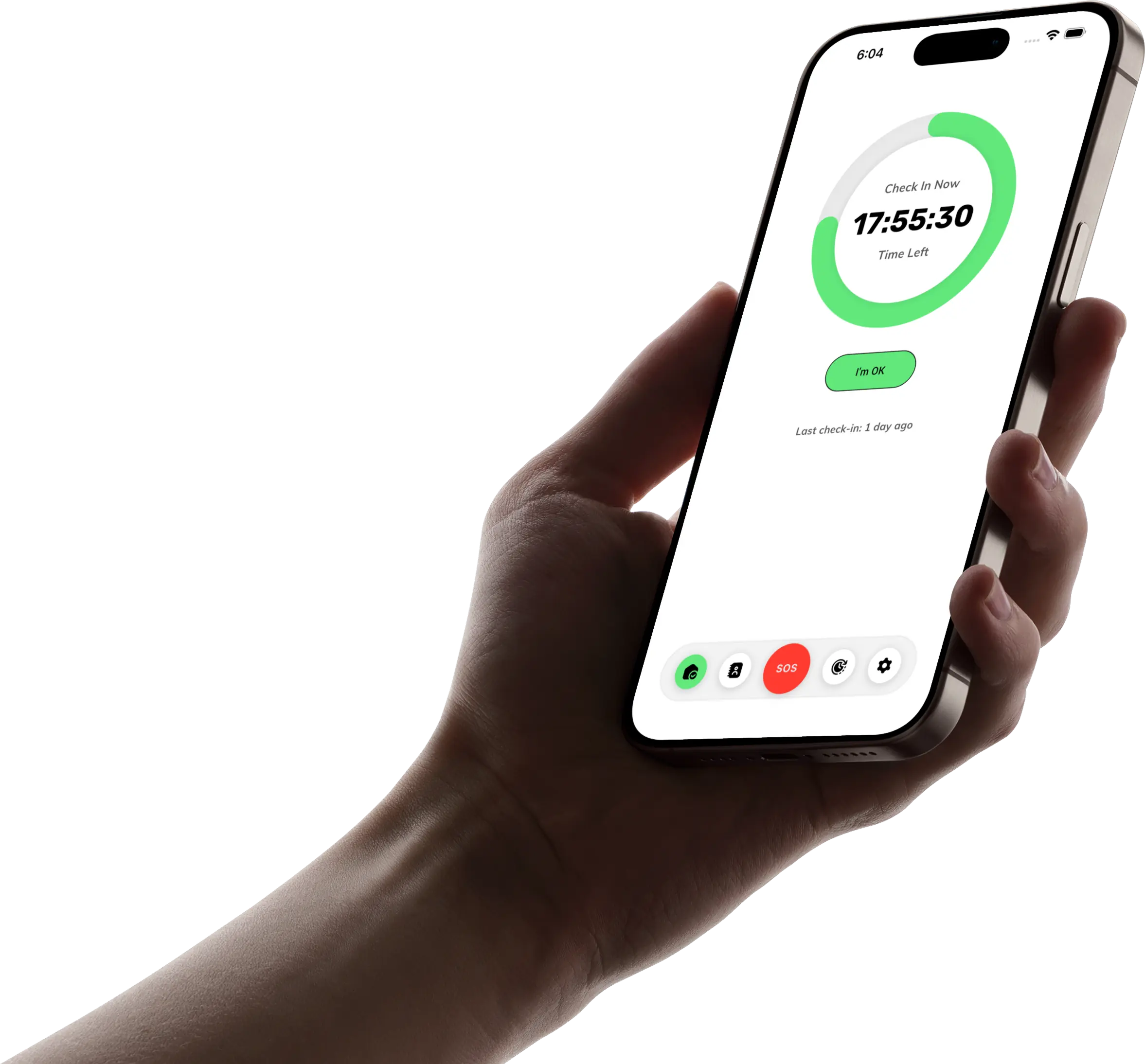
How to do it: Download TapOkie free. Add one trusted contact — a parent, sibling, friend, or neighbour. They receive a one-time SMS to confirm they're happy to be included. From that point, you tap "I'm OK" once a day. If you miss it, they get an SMS.
Your contact does not need to install anything. The alert arrives by text on any phone.
This takes under two minutes to set up. Once it's running, the daily habit is a single tap.
See How to Set Up a Safety Check-In Routine for an Ageing Parent if you're helping someone else with this step.
2. Save an ICE Contact in Your Phone
ICE stands for "In Case of Emergency." It is a contact saved in your phone's address book under the name ICE so emergency services can find it quickly.
Save at least one ICE contact. If you have a medical condition, add a note in the Health app (iPhone) or your lock screen (Android) with your blood type, allergies, and any medication.
3. Register With Your GP
If you have recently moved or started living alone, make sure you are registered with a local doctor. Emergency services need to be able to find your records.
If you live in the UK, also check whether your council or local authority has a voluntary register for vulnerable residents — it is used by emergency services when responding to your address.
4. Secure Your Front Door
The most common home entry method for opportunistic burglaries is an unlocked or weak door.
Checklist:
- Deadbolt on the front door, not just a latch
- Key-operated lock on any rear or side door
- Window locks on ground-floor windows
- Don't leave a spare key under the mat or in an obvious place
None of this requires expensive installation. A basic deadbolt costs less than £30 and can be fitted in an afternoon.
5. Know Your Neighbours
You do not need to be close friends with your neighbours. But knowing the name and face of the person next door — and having their phone number — means there is someone who can check on you physically if an SMS contact cannot get to you.
Introduce yourself if you haven't. Tell a trusted neighbour that you live alone and ask if you can exchange numbers for emergencies.
6. Set Up Smoke and Carbon Monoxide Alarms
Both are legal requirements in rented homes in the UK. Both are strongly recommended everywhere.
- One smoke alarm on every floor
- One CO alarm in any room with a gas appliance
- Test both monthly
Replace batteries once a year, or switch to a 10-year sealed battery model.
7. Know Where Your Utilities Are
In an emergency, you need to be able to turn off the gas, water, and electricity quickly.
- Gas: know where the main stopcock is (usually under the kitchen sink or near the meter)
- Water: know where the main stopcock is
- Electricity: know where the fuse box or consumer unit is
This takes five minutes to walk round your home and find out. Write the locations on a note stuck to your kitchen cupboard if it helps.
8. Keep a Small Emergency Kit
A basic kit for power cuts, illness, or being stuck at home:
- 3 days of non-perishable food and water
- Torch and spare batteries
- Basic first aid kit (plasters, bandages, antiseptic)
- Any prescription medication kept in stock (do not let repeat prescriptions run out)
- A phone charger and a portable battery pack
9. Review Your Digital Accounts
Living alone means there is no one to check your emails or notify services if you are hospitalised.
- Password manager: make sure a trusted person knows how to access your accounts if needed
- Bank and utilities: ensure your contact details are current so you receive alerts about anything unusual
- Email: consider setting up a trusted contact in Google or Apple's account settings for legacy access
This is not about giving anyone your passwords. It is about having a documented plan for your most important digital accounts.
10. Tell Someone Your Routine
The simplest safety net requires no technology: tell someone you trust what your normal routine looks like. When you usually get up, when you leave for work, when you typically call them. If you deviate significantly, they notice.
This is what a daily check-in app automates. But even with TapOkie running, a second person knowing your rough routine adds a human layer on top.
What to Do First
If you do only one thing from this list today, do item 1. Set up a daily check-in. Everything else on this list is valuable, but a daily signal that reaches someone you trust is the item that covers the greatest range of risk.
Download TapOkie free — it takes under two minutes and your contact gets their verification SMS today.
For a deeper look at specific risks, see Living Alone and Worried About Falls? 5 Tools That Actually Help and Best Safety Apps for Women Living Alone. Comparing apps before you choose? See Best Daily Check-In Apps for People Living Alone (2026).
Common questions
What should I do first from this checklist?
Set up a daily check-in (item 1). It takes under two minutes and covers the widest range of risk — illness, injury, or anything that leaves you unable to ask for help. Everything else on this list is valuable, but the daily check-in closes the most dangerous gap: the time between something going wrong and anyone noticing.
What if I fall and can't reach my phone?
A daily check-in app reduces the window between a fall and someone noticing — if you miss your tap, your contact is alerted the same day rather than days later. It does not prevent falls or detect them automatically. For higher clinical fall risk, consider a wearable fall detection device in addition to the check-in habit. See Fall Detection and Safety Tools for People Living Alone for a fuller breakdown.
Does my emergency contact need to install an app?
No. TapOkie sends alerts by SMS to any mobile phone. Your contact receives a plain text message and does not need a smartphone, a TapOkie account, or any app installed.
How often should I review this checklist?
Once when you first set it up, then roughly once a year — or whenever something significant changes (new address, change in health, new contacts). The check-in app runs automatically after setup; the physical items (smoke alarms, emergency kit, door locks) benefit from an annual check.
Want to understand exactly how the check-in works? See how TapOkie works in three steps.