By Syed Muhammad Daud Rizvi — Co-founder of TapOkie. Built the app after recognising how many people live alone with no simple way to let someone know they are OK each day.
Apple Watch fall detection is great for sudden impact events, but it can't detect illness, low energy, or days you forget to wear it. A daily check-in app works differently — one tap confirms you're OK each day, and if the tap is missed, your chosen contacts are notified automatically.
If you live alone, you've probably thought about what happens if something goes wrong and nobody knows. Apple Watch fall detection is one of the most talked-about answers to that question — and for good reason. But there's a growing conversation about whether it's enough on its own, and what a daily check-in app like TapOkie adds on top.
This post isn't about trashing Apple Watch. It's a genuinely good piece of technology, and fall detection is a meaningful feature. What it is about is being honest that fall detection and daily check-in habits cover different failure modes — and understanding the difference helps you make a smarter choice about your safety setup.
What Apple Watch Fall Detection Actually Does
Apple Watch fall detection uses the accelerometer and gyroscope to sense a hard impact followed by immobility. When it detects a likely fall, it taps your wrist and asks if you're OK. If you don't respond within about 60 seconds, it automatically calls emergency services and sends your location to your emergency contacts.
That's impressive. For a sudden, hard fall — tripping on stairs, slipping on ice, collapsing from a cardiac event mid-activity — it can trigger a response without you doing anything at all.
What it does well:
- Detects sudden high-impact falls automatically
- Calls emergency services without user action
- Works in the background while you wear it
- Shares your GPS location with emergency contacts instantly
Where Fall Detection Has Limits
The technology is reactive — it waits for a specific physical event. That means it has gaps that are worth understanding honestly.
What it doesn't cover:
- Gradual health deterioration: feeling increasingly unwell over hours, but never falling
- Silent emergencies where you're conscious but unable to summon help — a slow medical episode, a mental health crisis, extreme exhaustion
- Days when you're not wearing the watch — a flat battery, forgetting to put it on, or simply not being a daily watch wearer
- Soft falls that don't register as significant impacts (falling onto a bed, or a slow collapse against a wall)
- Non-physical situations: you locked yourself out in the cold, you've had a difficult night, you want someone to know you're OK without having an emergency
Fall detection is built around a single pattern: a sudden physical event. Life doesn't always follow that pattern.
How a Daily Check-In App Works Differently
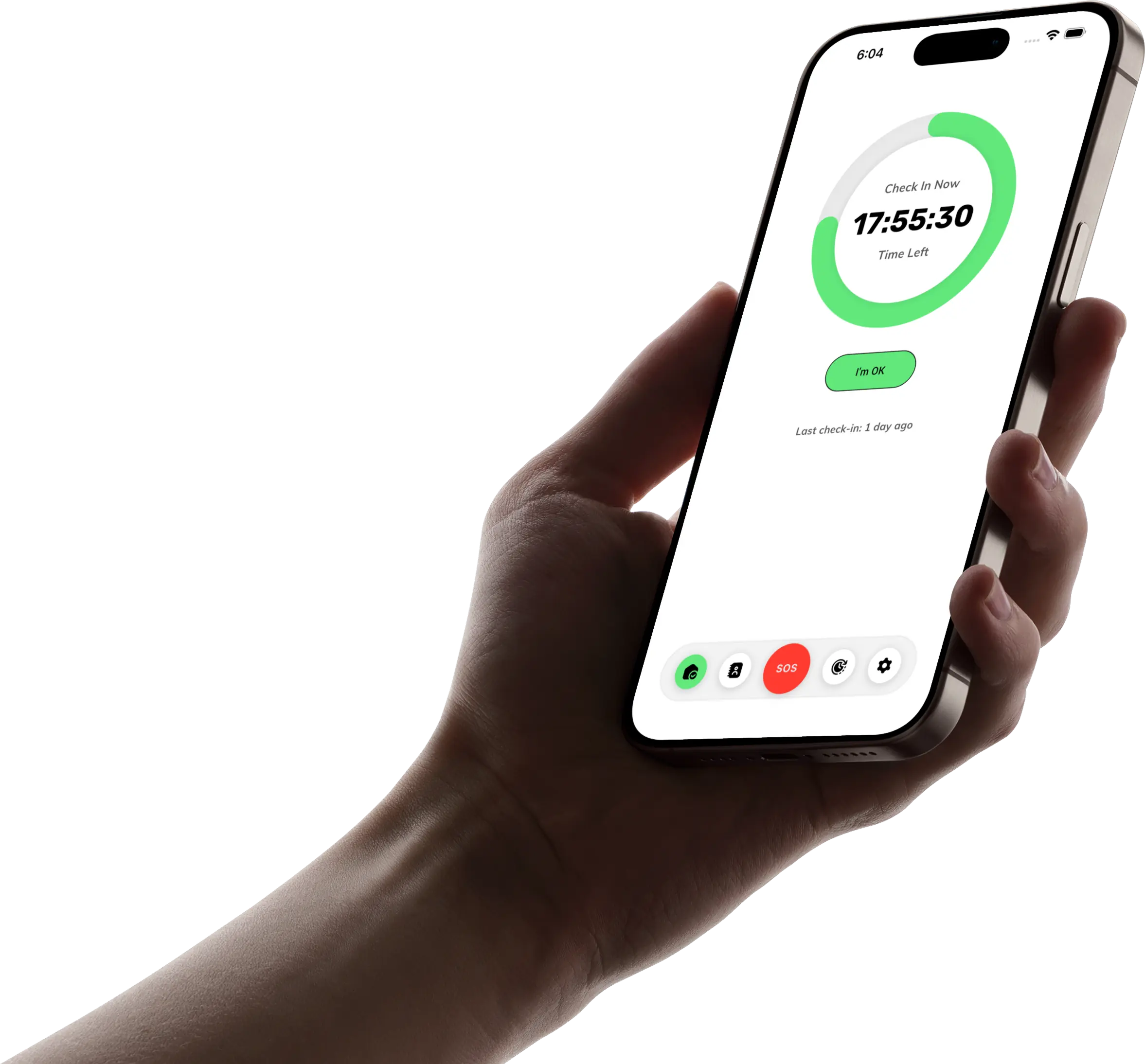
A daily check-in app operates on a completely different model. Instead of waiting for something to go wrong, it builds a small daily habit: once a day, you open the app and tap to say you're OK.
With TapOkie, that one tap sends a quiet confirmation signal. If the day passes and you haven't tapped — for any reason — your chosen contacts receive an SMS alert. Those contacts don't need to download anything. No app required on their end. They just get a message that tells them you haven't checked in, and they can decide what to do.
What a daily check-in covers:
- Gradual illness — you felt off yesterday, you haven't checked in today, your daughter knows to ring you
- Battery dead, watch not worn, phone left behind — the system notices the silence
- Non-fall emergencies — anything that stops your normal daily routine but doesn't trigger an accelerometer
- Peace of mind on ordinary days — contacts stay quiet when you check in, so nobody is interrupting you with "just checking" calls
What it doesn't do:
- It won't call 999 automatically — it alerts contacts, who then take action
- It doesn't provide real-time GPS location
- It requires a deliberate daily tap — it's a habit, not a passive sensor
Neither of these is a replacement for the other. They're built for different situations.
The Case for Using Both
The honest answer is that if you live alone and safety matters to you, these two tools complement each other rather than compete.
Apple Watch fall detection handles the sudden, acute moment — the hard fall you can't react to yourself. A daily check-in habit handles the quiet slow-burn situations: the illness that builds over a day, the emergency that isn't a fall, the days you're not wearing your watch.
Think of it this way. Fall detection is your safety net for the dramatic moment. A daily check-in is your regular signal that life is continuing normally — and when that signal goes quiet, your people know to check on you.
For many people living alone, the daily check-in is also more comfortable because it puts them in control. You're not waiting to be detected. You're actively saying: I'm here, I'm OK. That's a meaningful difference psychologically.
Where TapOkie Fits
TapOkie is a daily check-in app — straightforward and privacy-first. You set a daily check-in window, tap once when you're OK, and if the window closes without a tap, your verified contacts get an SMS.
It's not a medical alert device. It doesn't provide continuous GPS tracking. It won't automatically dispatch emergency services. What it does is fill the gap that passive hardware can't: the quiet daily confirmation that someone who lives alone is going about their day.
There's a free tier to try it out, and a Premium plan for those who want additional features. Your contacts need no app — which matters when your contacts are parents, siblings, or friends who aren't particularly tech-savvy.
If you already use Apple Watch and find the fall detection reassuring, TapOkie adds a daily layer that works whether or not you're wearing the watch. If you don't have an Apple Watch, a daily check-in is a low-friction way to give yourself and your contacts genuine peace of mind.
Download TapOkie and set up your first check-in
Common Questions
Does Apple Watch fall detection work if the battery dies?
No. If your Apple Watch is out of charge or not being worn, fall detection is not active. This is one of the most common gaps people don't think about until they experience a day without their watch. A daily check-in app doesn't depend on a wearable — it works from your phone.
Can I use fall detection and a check-in app at the same time?
Absolutely — and it's probably the most sensible setup for anyone living alone who wants thorough coverage. Fall detection handles acute physical events; a daily check-in covers everything else. They don't conflict.
What happens if I forget to check in with TapOkie?
If your check-in window closes without a tap, TapOkie sends an SMS to your chosen contacts. They'll know you haven't checked in and can decide whether to call, pop round, or take other action. It's not an automatic emergency call — it's a human-led response, which many people prefer.
Is TapOkie only for elderly people?
Not at all. TapOkie is used by anyone who lives alone and wants a simple way for people they trust to know they're OK — that includes people in their 30s and 40s, solo travellers, people with chronic health conditions, and people who simply live far from family. If you live alone and want low-friction peace of mind, it's relevant.
Related reading: Panic button app vs daily check-in: which do you need? · Living Alone and Worried About Falls? 5 Tools That Actually Help · Check-In vs Tracking: I Just Want Someone to Know I'm OK