By Syed Muhammad Daud Rizvi — Co-founder of TapOkie. Built the app after recognising how many people live alone with no simple way to let someone know they are OK each day.
After hospital discharge, living alone means the first weeks need a predictable daily check-in — not because every day is dangerous, but because recovery disrupts routines. A simple tap-by-time habit lets family know you are up and okay without GPS tracking or hourly calls.
Why the first weeks after discharge feel different
You are home. The hospital team signed you off. Friends assume you are "fine now."
In practice, recovery at home alone often means new medication schedules, fatigue, reduced mobility, and routines that used to be automatic — making breakfast, standing in the shower, answering the door — now take planning. A fall, a dizzy spell, or sleeping through a morning is more likely in this window than it was six months ago.
Family worry spikes for the same reason. They cannot see you. A daily "I'm okay" text helps, but it depends on you remembering to send it when you feel worst.
A structured check-in habit — same time each day, one tap when you are up — gives everyone a clearer signal than scattered messages.
What a discharge check-in plan should cover
Keep it short. One page is enough.
Daily check-in time. Pick a window you can usually meet — after morning medication, after breakfast, before lunch. Consistency matters more than an early hour.
Who gets notified if you miss it. Usually one primary contact (partner, adult child, sibling) and optionally a backup. Name them explicitly.
What "missed" means. If you do not check in by your chosen time, your contact receives an alert and can call or visit. That is the whole escalation — not an ambulance by default.
What you will do if you need help before check-in time. SOS or a direct call. The daily habit is for the ordinary day; emergencies still go straight to help.
When to review the plan. Many people tighten the habit for two to four weeks, then move to a looser schedule as strength returns. Write a review date on the calendar.
Why check-in beats constant location tracking
After discharge, some families install GPS trackers or demand live location sharing. That can feel like surveillance when you are already adjusting to vulnerability at home.
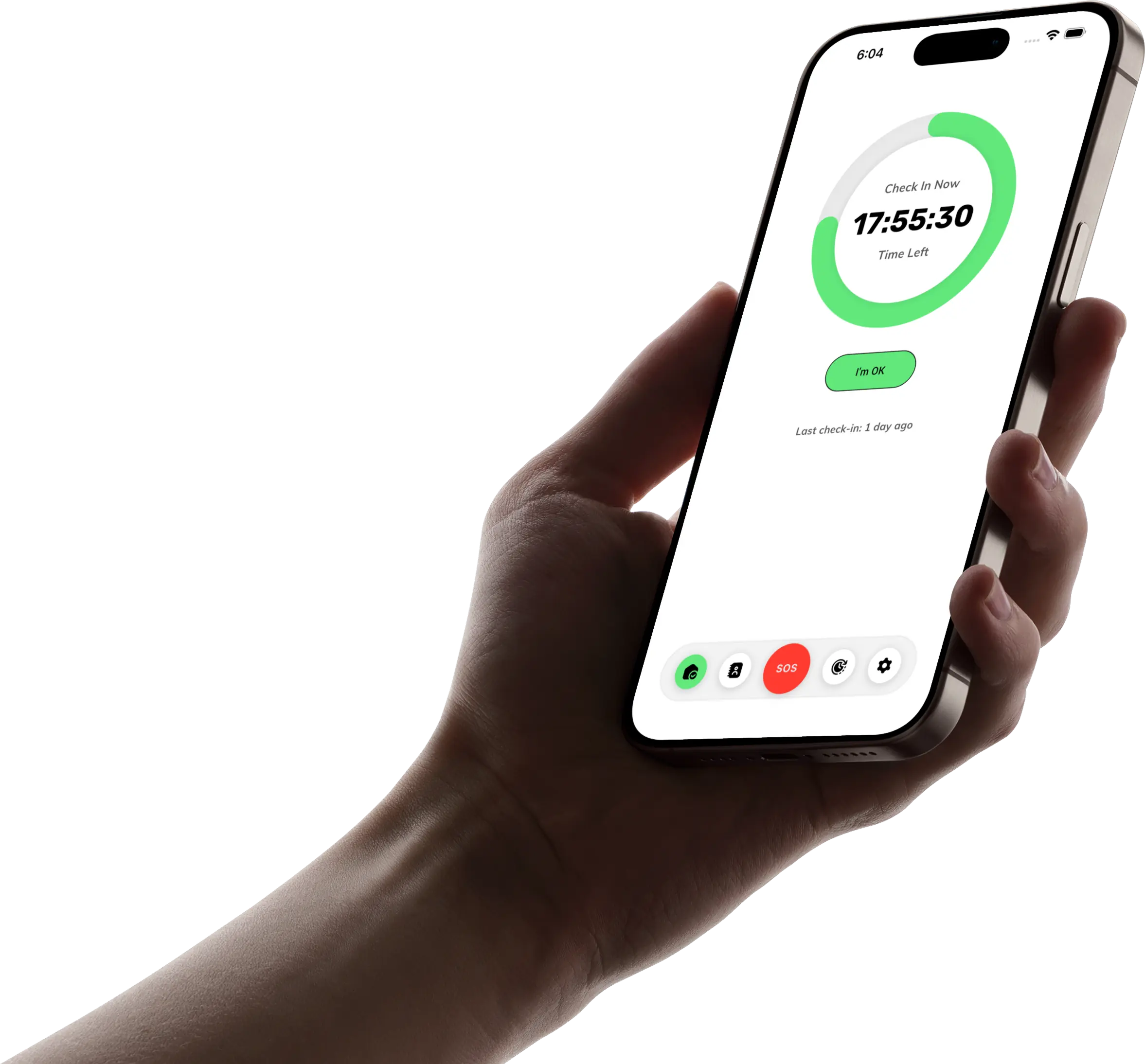
TapOkie is built around a daily check-in and optional timed sessions — not continuous tracking. Family learns you are okay when you tap; they are not watching every movement between taps. For many people in recovery, that balance preserves dignity and still closes the "nobody knew" gap.
Building the habit when energy is low
Recovery days are uneven. On good days, check-in takes seconds. On bad days, everything is harder — including remembering.
Practical tips:
- Tie check-in to something you already do: kettle, first cup of tea, opening blinds.
- Keep the phone where you will see it in the morning, not buried in a bag.
- Tell your contact the plan: "If you get an alert, call me — I might have overslept."
- Use the same time window for the first two weeks; adjust only after the habit sticks.
If you use Safety Trail, the growing record of daily check-ins becomes reassuring evidence that recovery is steady — not just one good day.
What family should do when they get an alert
A missed check-in after discharge is not automatically an emergency. Common causes:
- Slept longer because of medication
- Phone on silent in another room
- Appointment ran early and routine shifted
Your contact should call once, then visit or escalate if they cannot reach you. Agree this in advance so alerts feel supportive, not punitive.
When to involve more than daily check-in
Some discharge plans include home care visits, district nurses, or family dropping in on set days. Daily check-in complements those visits — it covers the mornings and evenings when nobody is scheduled.
If risk is higher (recent fall, cognitive changes, complex medication), you might add shorter timed sessions for specific activities: a solo walk, bathing, cooking on a new stove. End the session when the activity is done; family only gets signal if you do not close it.
TapOkie for the post-discharge window
TapOkie lets you set a daily check-in time, add contacts who receive alerts only when you miss it, and optionally run timed sessions for higher-risk parts of the day. No GPS tracking. Free to start on iOS and Android.
Download TapOkie or read how daily check-in works.
Common questions
How long should I keep a strict daily check-in after hospital discharge?
Many people use a firm daily window for two to four weeks, then review with family. If routines are stable and confidence is back, you might widen the window or check in less formally. There is no single rule — the plan should match how you are actually recovering.
Will my family get alerts if I just oversleep?
They may receive a missed check-in alert if you sleep past your window. That is why agreeing on a call-first response matters. Oversleeping is common with pain medication; a phone call usually resolves it without panic.
Is this different from a medical alarm or pendant?
Medical pendants are for pressing help when something is wrong. Daily check-in covers the opposite case: nothing dramatic happened, but nobody would know if you could not get out of bed. Many households use both — pendant for emergencies, check-in for quiet ordinary days.
Can I use TapOkie if I am not fully "solo" but partner works long hours?
Yes. You may be alone for most of the day even if someone returns each evening. The check-in habit addresses the hours when no one is home — which is often when discharge risk concentrates.