Door Syed Muhammad Daud Rizvi — Medeoprichter van TapOkie. Bouwde de app omdat zoveel mensen alleen wonen zonder eenvoudige manier om dagelijks te laten weten dat het goed gaat.
Living alone can gradually erode mental wellbeing through low-grade isolation — not dramatic loneliness, but a quiet absence of the ambient connection that cohabitation provides. A deliberate daily rhythm, including a check-in habit with someone you trust, gives structure and maintains a thread of social proof that someone knows you're OK.
Living alone is not, by itself, bad for mental health. Many people live alone and thrive. But the absence of other people in your daily environment does create particular conditions — and for some, those conditions quietly erode wellbeing over months or years before the pattern becomes obvious.
This is not about being antisocial or struggling. It is about understanding what solo living changes, and building habits that compensate.
The Quiet Accumulation of Isolation
The mental health risk of living alone is rarely acute. Most people do not go from fine to struggling overnight. The more common pattern is a slow drift: fewer natural opportunities for social contact, days that pass with only functional interactions (a shop assistant, a colleague on a call), and evenings that are quiet in a way that stops feeling peaceful and starts feeling hollow.
Psychologists sometimes call this the absence of social proof — the background reassurance that comes from being seen and known by people around you. When you live with others, you get this without trying. Someone hears you come in, notices you're tired, asks how your day was. When you live alone, you can go an entire week without anyone checking in — not because people don't care, but because ordinary life does not prompt them to.
Over time, that absence can create anxiety: is anyone thinking about me? Would anyone notice if something happened? This kind of low-grade worry is one of the most consistent mental health findings in research on solo living adults.
Loneliness and Isolation Are Not the Same Thing
It is worth separating two things that often get conflated.
Loneliness is a felt experience — you feel disconnected, even if you are around people. You can be lonely in a busy house and not lonely living alone.
Isolation is a structural condition — you have fewer social contacts, less frequent interaction, less ambient human presence. Isolation does not always produce loneliness, but it does increase the risk of it.
People living alone are more exposed to structural isolation. That does not mean they are lonely. But it does mean they need to be more deliberate about maintaining the connections that cohabitation supplies automatically.
The Role of Routine and Rhythm
One of the most practical protective factors for mental wellbeing when living alone is deliberate routine. Not a rigid schedule, but a rhythm that gives days shape and includes moments of connection.
This might look like:
- A regular morning practice (exercise, coffee, a walk) that anchors the start of the day
- A meal that is eaten somewhere other than the sofa, even if just at the kitchen table
- A check-in with one person — family, friend, or neighbour — at some point each day or most days
- An end-of-day signal that marks the shift from work or activity to rest
None of these require company. But they create a scaffolding that makes the absence of company easier to carry.
What a Daily Check-In Does for Mental Health
A daily check-in habit serves two purposes. The obvious one is safety: if something goes wrong physically, someone finds out the same day. But the less obvious benefit is psychological.
Knowing that someone will notice if you do not tap today changes the felt quality of your aloneness. You are alone, but you are not invisible. Someone is holding a low-level awareness of you. That is not intrusive — it is actually closer to the ambient connection that cohabitation provides.
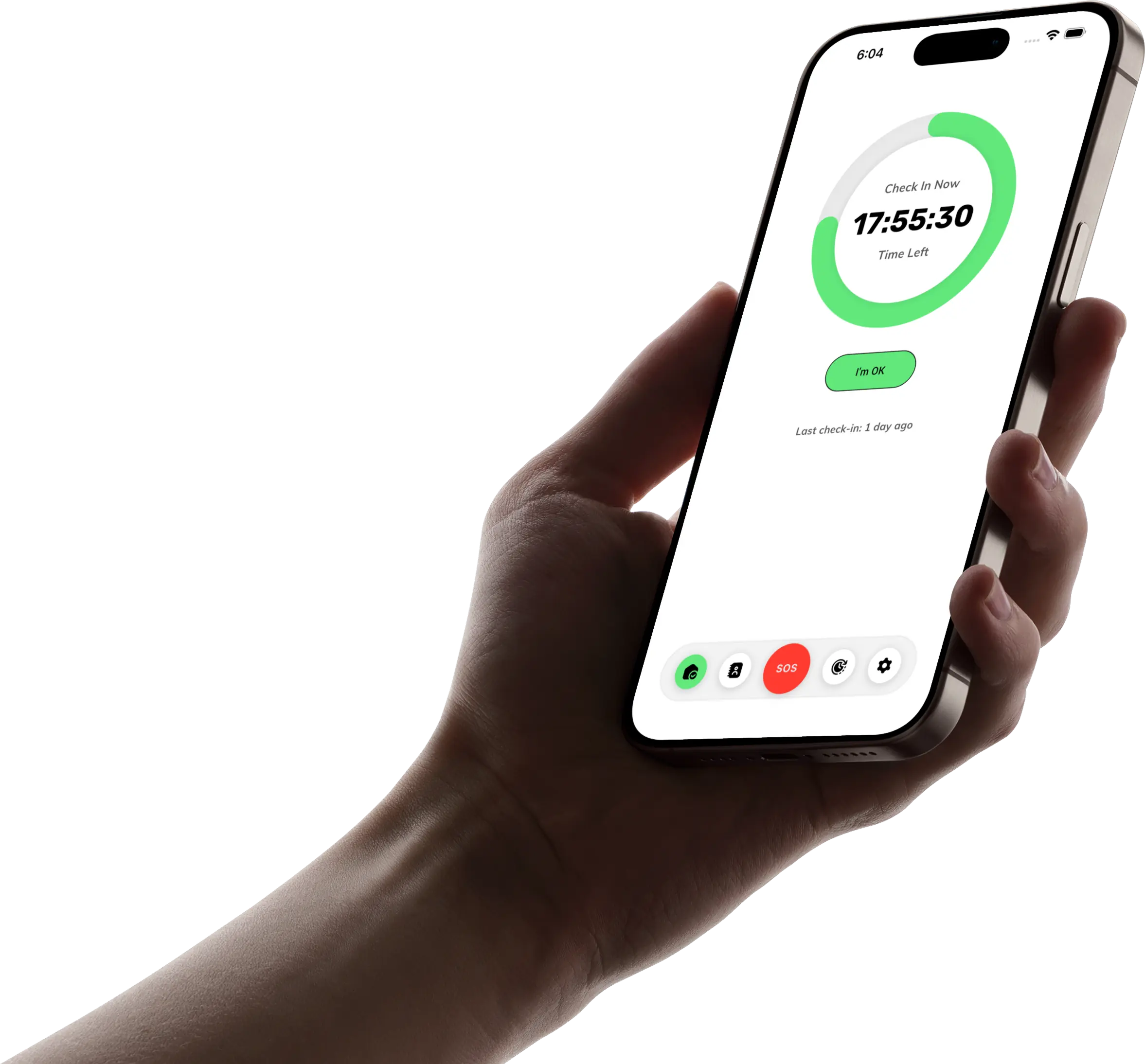
TapOkie works on this principle. Once a day, you tap to confirm you are OK. If you miss your window, your verified contacts receive an SMS alert. Your contacts do not need to install anything. They receive a plain text message on whatever phone they already have.
The tap itself is a micro-moment of connection — a habit that says, at least once a day, I am here, and someone knows it.
For people who live alone and find the evenings particularly quiet, setting the check-in window for the end of the day can create a useful closing punctuation for the day. The tap becomes part of the evening wind-down routine.
When It Is More Than Low-Level Isolation
Everything above describes the ordinary mental health landscape of solo living. But some people find that living alone tips into something more difficult: persistent low mood, significant anxiety, withdrawal from social contact, or feelings of hopelessness.
If this describes you, a daily check-in app is not a substitute for support. It is one practical layer — but it works alongside, not instead of, talking to your GP, a counsellor, or trusted people in your life.
Signs that it may be worth speaking to someone:
- You are actively avoiding social contact that you used to enjoy
- You feel flat or low most days, not just some
- You have started to feel that your absence would not matter to people
- You are having thoughts of harming yourself
Your GP is the right first port of call. In the UK, you can also refer yourself directly to NHS talking therapies without a GP referral.
Practical Steps Worth Taking
Beyond the check-in habit, a few things are worth building into solo living for mental wellbeing:
One regular in-person commitment. A weekly class, a standing lunch with a friend, a sport or hobby that involves other people. Something that is difficult to cancel unilaterally because others are expecting you.
A contact who knows your ordinary rhythms. Not a formal emergency contact, just someone who would notice if your pattern changed significantly. A neighbour, a sibling, a friend you text most days.
Something to look forward to most weeks. The psychological research on wellbeing is consistent: anticipation of positive events sustains mood. Small things count — a programme to watch, a meal to cook, a walk in a place you like.
See also: What Happens If No One Checks on You When You Live Alone? for the safety dimension, and Living Alone Safety Checklist: 10 Things to Set Up for practical steps that overlap with both safety and wellbeing.
Download TapOkie free — setup takes under two minutes, and your contact gets their verification SMS today.
Common questions
Does living alone cause depression?
Living alone does not directly cause depression, but it does increase exposure to structural isolation, which is a known risk factor. Many people live alone without any mental health difficulties. The risk is higher in people who already have fewer social connections or who have recently moved to solo living after a relationship ending or bereavement.
How do I tell the difference between enjoying solitude and unhealthy isolation?
Solitude feels chosen and restorative. Isolation feels involuntary and depleting. If you are choosing to be alone and feel well, that is solitude. If you find yourself stuck at home most days without wanting to be, avoiding contact, or feeling worse than usual over an extended period, that is worth paying attention to.
Can a daily check-in app help with loneliness?
Not directly. It cannot replace human connection. But it does create one small daily thread of social awareness — someone knows you tapped, or will act if you did not — which some people find surprisingly grounding. It is a modest support, not a solution.
How many contacts should I have if I live alone?
For safety purposes, one verified contact is the minimum. For mental wellbeing, research consistently suggests three to five meaningful relationships provide a robust buffer against loneliness. Quality matters more than quantity.
Is it normal to feel anxious about living alone?
Yes, especially when you first move into solo living or after a significant life change. Mild background anxiety about what would happen if something went wrong is very common. A daily check-in habit addresses that specific worry directly, which many people find reduces it substantially.