Di Syed Muhammad Daud Rizvi , Cofondatore di TapOkie. Ha creato l'app dopo aver capito quante persone vivono sole senza un modo semplice per dire ogni giorno che stanno bene.
Freelancers and people who work alone often need a personal safety habit, not employer software. A daily or end-of-day check-in with SMS to your own contacts is lighter than enterprise lone worker platforms and does not depend on a manager dashboard you do not have.
If you work alone — freelancing from home, doing client visits without a team, or contracting independently — you face a simple but under-addressed risk: if something happened to you today, how long before anyone noticed?
Most safety tools marketed at "lone workers" are built for employers: dashboards, compliance audits, escalation chains, and per-seat pricing that makes sense when a company is paying. That is a different product for a different problem.
What you need as an individual is a personal safety habit — lightweight, private, and something you pay for yourself. Not HR software.
Note: TapOkie Work is our B2B product for employer teams. This post covers the TapOkie consumer app — the personal daily check-in for individuals who work alone.
Who works alone — and why a personal safety habit matters
Working alone goes well beyond construction sites and utility engineers. It includes:
- Freelancers and self-employed people working from home alone
- Remote workers who are the only person on their floor or in their house
- Sole traders who do client visits without a team
- Contractors who travel between sites independently
- Anyone whose workday goes largely unobserved
For this group, the relevant question is not "does my employer have a duty of care?" - it is "if something happened to me today, how long would it take for anyone to notice?"
Why employer tools do not fit individual lone workers
TapOkie Work is our B2B product for teams - it has manager dashboards, session check-ins, and employer-side reporting. That is not what we are describing here.
What individual lone workers need is different:
- A personal habit that runs in the background without HR involvement
- Contacts who are family or friends, not managers
- No employer access to your check-in data
- A free or low-cost plan that you pay for yourself
TapOkie (consumer) is built for exactly this. Your check-ins are private to you and your chosen contacts. Your employer sees nothing.
What the daily check-in habit looks like for a freelancer
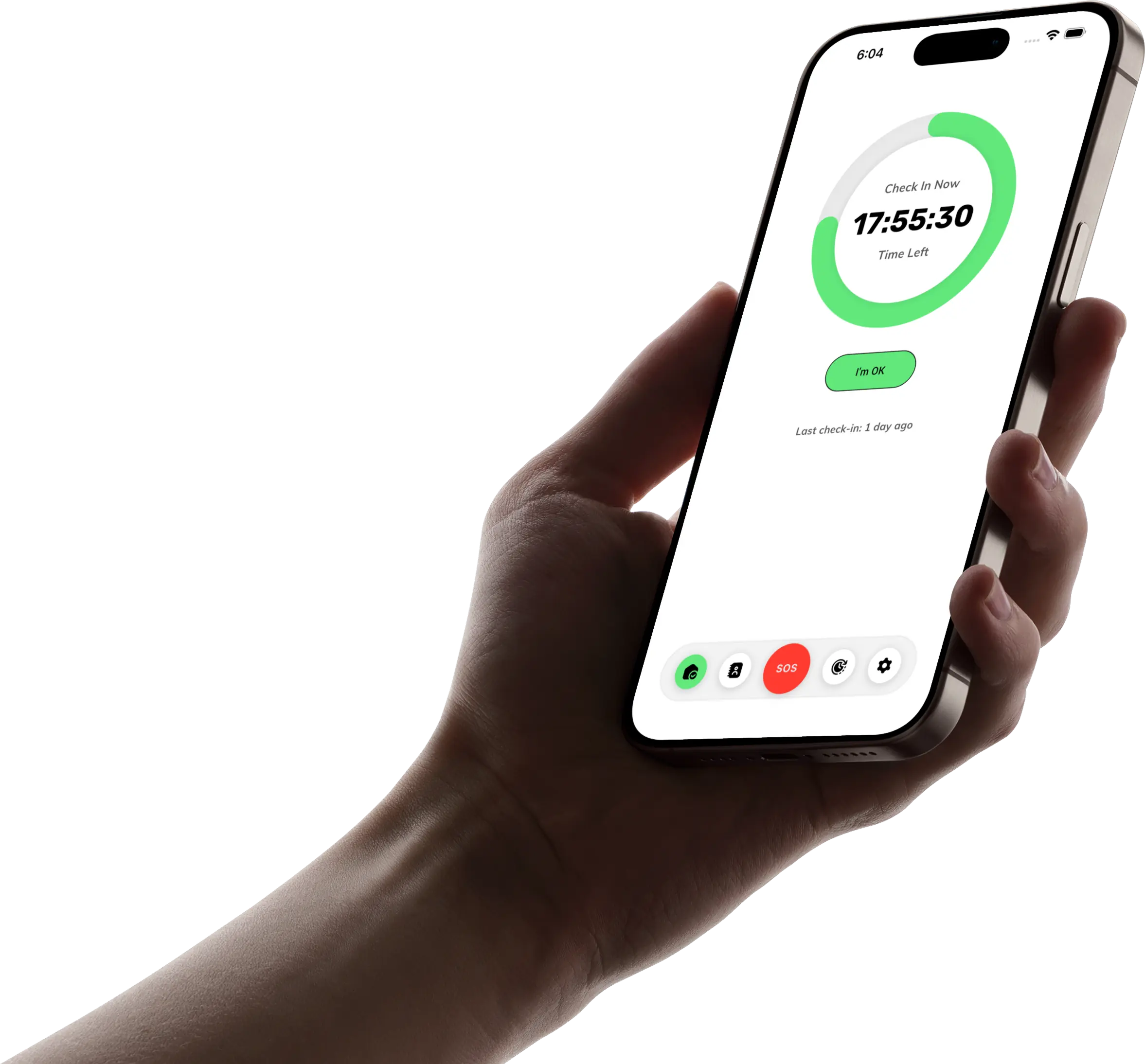
Morning or end-of-day tap: Most freelancers set their check-in window to match the end of their working day - 6pm, for instance. If they tap before 6pm, their contact hears nothing. If they do not tap by 6:15pm (with a 15-minute grace period on Premium), the contact gets an SMS.
Who receives the alert: You choose - a partner, a parent, a friend. They receive a plain SMS to whatever phone they already use. They do not need TapOkie installed.
What the alert says: It tells your contact you missed your check-in and (optionally) your last known location. It is not a full emergency - it is a prompt to check in on you.
The statistics behind the need
The Health and Safety Executive (HSE) in the UK defines lone working broadly and notes that millions of workers work alone at some point during their working week. The HSE guidance on lone workers applies to self-employed people as much as to employees - but it does not provide a compliance product for individuals. That gap is what a personal check-in app fills.
In the US, the Bureau of Labor Statistics reported over 4,800 fatal workplace injuries in 2023, many involving workers who were alone at the time of the incident (BLS Census of Fatal Occupational Injuries, 2023). For individual contractors and sole traders, there is often no system in place to notice if an injury goes unreported.
Choosing a personal lone worker check-in app
Look for:
- No employer involvement - your contacts are people you trust personally, not your manager
- SMS alerts - contacts can be alerted without installing anything
- Pause and skip - cover days off, holidays, and irregular schedules
- Emergency button - for genuine emergencies during the working day (available on TapOkie Premium)
- Affordable - a personal safety habit should not cost what a team tool costs
TapOkie free covers the core habit: one verified contact, daily check-in, SMS alert on miss. Premium (around $4.99/month) adds more contacts, custom schedules, and an emergency button.
Setting it up
1. Set your check-in window to match the end of your working day 2. Add a contact who you trust to respond if they get an alert - a partner, family member, or close friend 3. Use pause on days you are not working - bank holidays, leave, unstructured days 4. Set up the emergency button (Premium) for any visits or solo work that carries higher risk
A daily check-in takes about two seconds. The habit it builds - someone knowing you checked in today - is worth considerably more than two seconds.
Related: Panic button app vs daily check-in: which do you actually need?, privacy-first safety apps without GPS tracking, and best daily check-in apps for people living alone (2026).
Download TapOkie free and set up your personal check-in today. Your contact gets their verification SMS the same day — no app required on their end.
Common questions
Is this the same as TapOkie Work?
No. Personal TapOkie is for your circle. TapOkie Work is for organisations with visits, managers, and audits.
Who should freelancers notify?
A partner, friend, or family member willing to act — not clients by default.
Do I need GPS?
Only if you want it. Many freelancers prefer signal-based check-ins without continuous tracking.
Can employers require personal apps?
Workplace duty of care usually needs organisational monitoring. Personal apps are for personal risk, not a substitute for employer systems where required.