Av Syed Muhammad Daud Rizvi — Medgrundare av TapOkie. Byggde appen efter att ha insett hur många som bor ensamma utan ett enkelt sätt att säga att de mår bra varje dag.
Always-on GPS often fails with older adults because it feels like surveillance, drains batteries, creates false alerts, and breaks trust when locations are wrong. Signal-based daily check-ins tend to survive longer because the person keeps control and their circle only hears when a promised habit is missed.
GPS tracking apps promise to keep older adults safe — but in practice, they often break the trust they were meant to build. Here is why, and what works better.
If you've ever debated installing location sharing "for Mum's safety," you're not unethical — you're reacting to something real. Research published in the *Gerontologist* journal consistently shows that older adults value autonomy and privacy as primary determinants of wellbeing — often rating them above safety convenience in caregiver decisions. Technology that overrides those preferences tends to fail in practice, regardless of technical capability.
The friction usually isn't technology. It's agency. Many older adults resent being monitored not because GPS is magically evil, but because consent disappears somewhere between "we're worried" and "we always know where you are."
Understanding that emotional failure mode matters when you evaluate tools honestly.
The surveillance bargain families don't articulate
Traditional tracking apps optimise for one outcome: maximally continuous location history for the caregiver's peace of mind. That asymmetric bargain often feels like safety to Adult Child A - and capitulation to Parent B - even when both love each other.
Three predictable outcomes emerge in user research forums, Age UK styled communities in the UK, caregiving Reddit threads anywhere in English, and unsolicited emails to small teams shipping age-tech tools:
Uninstallation. Quiet removal after a shouting match nobody posts on LinkedIn.
Ghost compliance. The app stays on the phone - but location is off, permissions get revoked, or the device "mysteriously" stops updating.
Relationship debt. Every map ping becomes a micro-argument in a relationship that used to be about Sunday lunch.
None of that is the fault of any single Google Play category. It's the dominant product shape that produces it.
Why older adults often reject always-on tracking
Three threads repeat:
Dignity. Treating an independent adult like a minor with a curfew breaks trust faster than it prevents falls.
Privacy literacy. Users over 60 are not clueless about privacy - many are more cautious than their children.
Low tolerance for needless complexity. If the payoff is ambiguous ("you're tracked so we stress less") uninstall risk rises.
Medical alert pendants and formal telecare bundles solve a different quadrant - emergencies that need a button right now. Always-on GPS pretends it's the same quadrant, but it's socially continuous even when medically silent.
The signal-based alternative: trust the deliberate check-in
The alternative framing is blunt: instead of extracting location by default, let the solo-living adult choose whether to send a deliberate "I'm okay" heartbeat - and escalate only when that heartbeat fails within an agreed rhythm.
Psychologically that's different:
- Independence stays visible because check-ins arrive from the user, not from a crawler.
- Anxiety still gets data - but proportional data.
- Silence becomes actionable instead of speculative.
Critically good tools also put contacts on SMS rather than trapping everyone in proprietary apps. Phones older than TikTok suddenly become reachable again.
TapOkie's model aligns with all three:
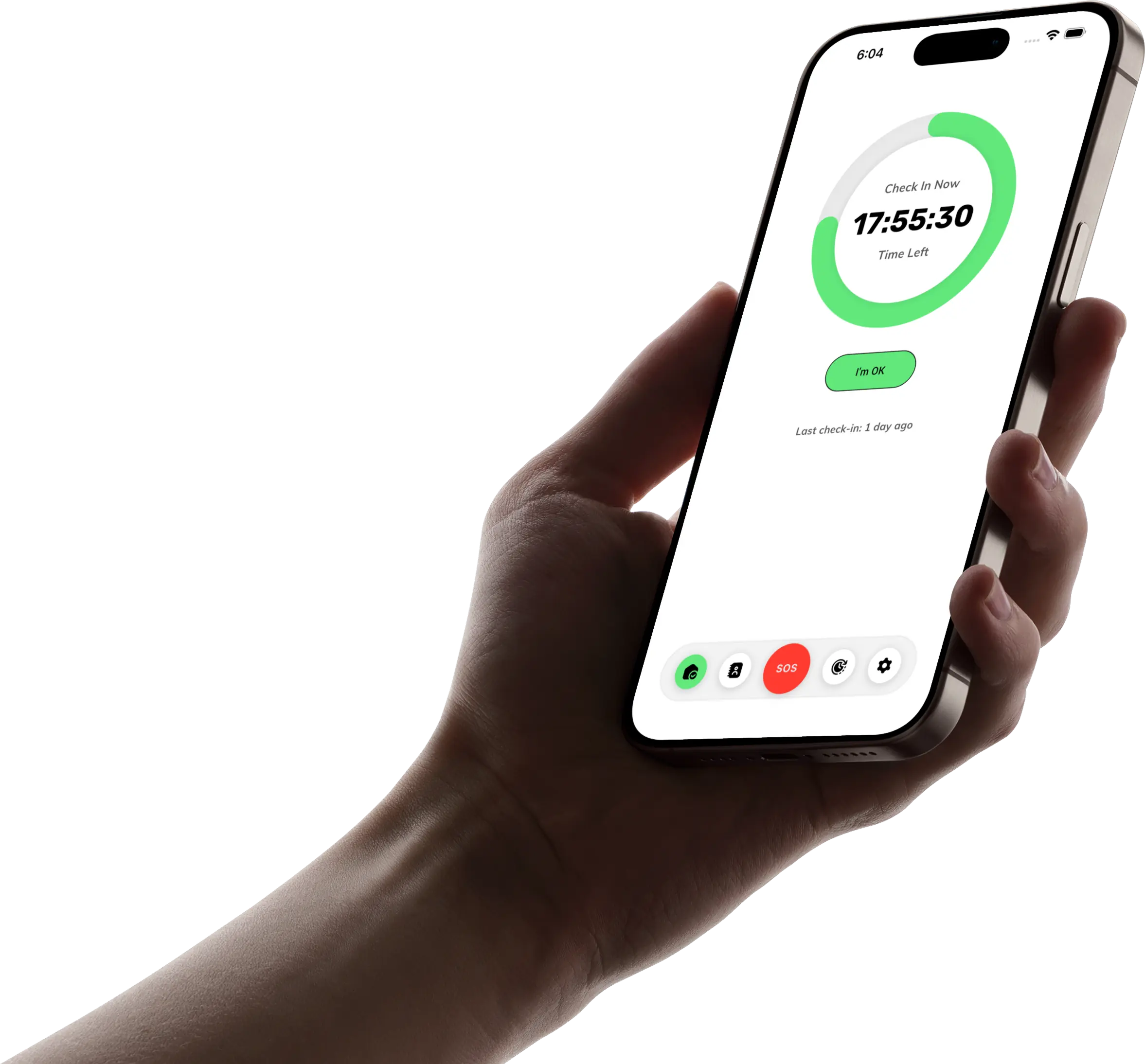
- TapOkie uses a daily tap to confirm OK rhythm.
- Missed checks trigger SMS alerts to chosen contacts - no TapOkie install required on their side.
- Location is optional, controlled through conventional OS dialogs - Always (if explicitly enabled), While Using the App (typically only at check-in), or off. See FAQs.
- Premium subscription tiers add SOS, scheduling, pause/skip, languages - extras that amplify the humane core rather than rewriting it.
You're not morally obliged to adopt TapOkie to agree with this essay: many families improvise equivalents with disciplined texts. If you crave structure that survives busy weeks, software helps.
How this complements other posts
We've written about solo living demographics globally in How Many People Live Alone in the UK — And Why That's a Safety Problem — the numbers vindicate urgency.
For step-by-step family ritual ideas that don't require subscriptions, revisit five ways to check on elderly parents remotely.
If falls are the emotional trigger for tracking conversations, Living Alone and Worried About Falls? 5 Tools That Actually Help separates home fixes, wearables, and daily check-ins without treating GPS as the default. To actually install a routine with a parent, use How to Set Up a Safety Check-In Routine for an Ageing Parent.
For a privacy-first comparison of safety tools that don't require always-on GPS, see Privacy-First Safety Apps: The Complete List.
For a direct TapOkie vs Life360 breakdown — including when GPS tracking is the right choice — TapOkie vs Life360: check-in app vs GPS tracker compared covers both sides honestly.
Peace of mind can be reciprocal: your parent signals when they're fine; you stop inventing worst-case GPS spirals on Tuesday nights. Download TapOkie - free core daily check-ins - and see if the habit fits your family better than another map tab.
Common questions
Why do older adults abandon trackers?
Perceived loss of dignity, confusing UIs, battery anxiety, and family conflict over maps.
What works better?
Consented check-ins with SMS, large buttons, and optional location only when useful.
Is tracking ever appropriate?
Yes for some clinical or high-risk scenarios with clear consent — not as a default for every parent.
How can TapOkie help?
Daily taps and miss SMS keep independence while still producing a safety net.