Von Syed Muhammad Daud Rizvi — Mitgründer von TapOkie. Entwickelte die App, weil so viele Menschen allein leben und keinen einfachen Weg haben, jemandem täglich zu signalisieren, dass es ihnen gut geht.
Conversations about safety apps succeed when you lead with respect: name the delay problem, invite their preferences, offer a short trial, and never spring always-on tracking as the default. A daily check-in is easier to accept than a family locator for many independent older adults.
This is the conversation guide — how to introduce the idea, handle objections, and protect your parent's sense of autonomy. Already had the conversation and ready to configure it together? See How to Set Up a Safety Check-In Routine for an Ageing Parent for the step-by-step setup.
You want your parent to be safer. They want to stay independent. Both of those things are true at the same time, and the conversation about safety apps is where those two realities can collide.
Done poorly, this conversation sounds like: "I don't think you can manage alone anymore." Done well, it sounds like: "I'd worry less if we had a simple system — here's one that barely takes a second."
Here is how to have the second conversation.
Start With the Problem, Not the Solution
Resist the urge to open with "I found this great app." That positions you as the one solving a problem your parent may not believe they have.
Instead, lead with how you feel:
- "I worry about you on mornings I don't hear from you."
- "It would help me to know you're OK at the start of the day without me having to call."
- "Is there something simple we could set up so I feel less anxious?"
This reframes the conversation from "you need monitoring" to "we need a solution that works for both of us." Your parent is more likely to be open to something that helps you worry less than something that implies they need help.
Acknowledge What They're Protecting
Independence, dignity, and privacy are not unreasonable things to want. If your parent resists a safety app, they're usually resisting one of these three things:
- Being tracked — many GPS apps feel like surveillance
- Being treated like a child — anything that involves daily check-ups can feel condescending
- Complexity — apps that require learning a new interface are a real barrier
The right response to each is:
- Tracking: choose an app with no always-on GPS. TapOkie, for example, does not monitor location continuously — your parent decides whether to share location at all, using their device's standard permission settings.
- Condescension: frame the check-in as a habit they control, not a report they file. They choose when in the day to tap.
- Complexity: show them the actual app. One button. That is all.
Walk Through It Together
Abstract reassurances ("it's really simple!") are less convincing than a live demonstration. If possible, set up the app while you're with your parent — even over a video call.
- Download TapOkie on their phone
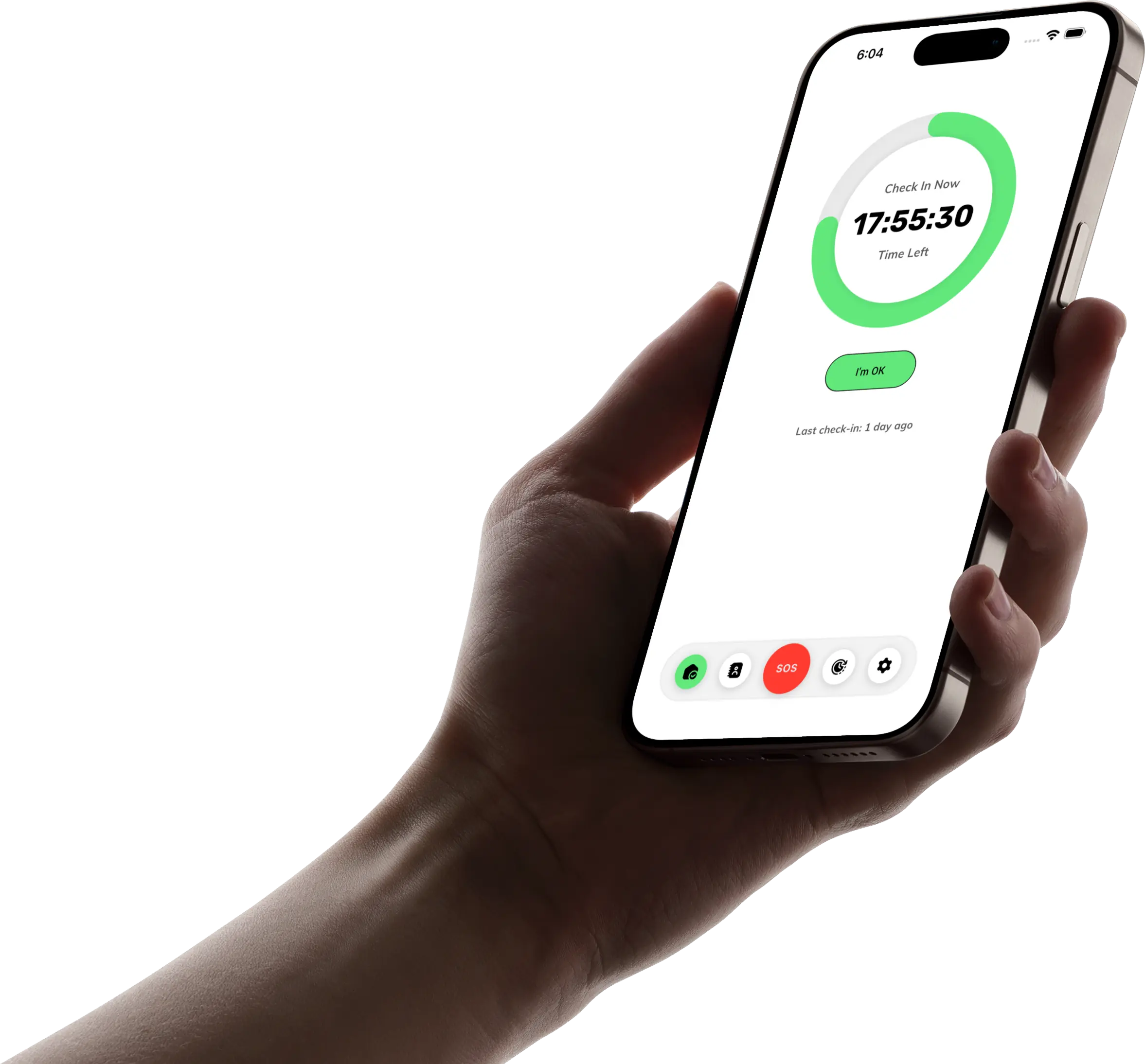
- Show them the single "I'm OK" button
- Have them add you as their contact — you receive the verification SMS and confirm
- Set a check-in window that suits their morning routine (they choose the time)
The demonstration answers the "but what if I forget?" question before they ask it: there is a reminder. The "but what if I'm on holiday?" question: they can pause check-ins. The "but I don't want you to know where I am" question: they can leave location sharing off entirely. See the features page for the full picture.
Give Them Control of the Narrative
How your parent talks about this to friends and neighbours matters to them. "My daughter set up a tracking app on my phone" is embarrassing. "I use a daily check-in so my family doesn't worry" is something they can be comfortable saying.
Help them find the framing. Ask: "How would you describe this to a friend?" If they struggle, suggest: "It's like a morning routine — I just tap once and they know I'm up."
Handle the "I'm Not That Old" Pushback
If your parent feels you're bringing this up because you think they're declining, acknowledge it directly:
"I know you're perfectly fine. That's not what this is about. It's about what happens on the day something isn't fine — and neither of us wants that day to be a problem because there was no easy way to know."
A daily check-in app is not for the person who has a health event. It is for the 364 other days, when knowing they tapped "I'm OK" means you don't spend the morning wondering.
What Good Looks Like
A successful setup looks like this:
- Your parent checks in when it suits them — morning coffee, after breakfast, whenever
- If they forget, TapOkie sends a reminder
- If they miss the window, you get an SMS — on any phone, no app required
- Both of you have agreed on what you'll do when that SMS arrives
That last part matters. Have the conversation about the plan before you need it. If you get the alert at 11 AM on a Tuesday, do you call first? Go round? Ask a neighbour to check?
For a step-by-step on building that full routine, see How to Set Up a Safety Check-In Routine for an Ageing Parent.
The Bottom Line
The conversation about a safety app goes better when it starts from "this helps both of us" rather than "you need this." Give your parent as much control over the setup as possible — when they check in, whether they share location, who is in their circle.
TapOkie is free to start with one contact. Set it up together. If it works, great. If they want to adjust it or try something else, that is their choice to make.
Ready to configure the routine together? How to Set Up a Safety Check-In Routine for an Ageing Parent walks through the five steps — rhythm, contacts, windows, and escalation — in an afternoon.
Download TapOkie free and set up the first check-in together. If it works for both of you, great. If you want to adjust it, that's their choice to make.
Also useful: 5 Ways to Check on Elderly Parents Remotely — practical methods beyond apps, including routine-building and local contacts.
Common questions
What should I not say?
Avoid implying they are frail, forgetful, or incapable — that almost guarantees resistance.
What works better?
Offer control: they choose the window, the contact, and whether location is ever shared.
How long should a trial run?
One to two weeks is enough to see if the habit sticks.
What if they refuse any tech?
Agree a human call routine as a second-best, but keep the door open for a lighter app later.