Von Syed Muhammad Daud Rizvi — Mitgründer von TapOkie. Entwickelte die App, weil so viele Menschen allein leben und keinen einfachen Weg haben, jemandem täglich zu signalisieren, dass es ihnen gut geht.
After losing a spouse or partner, living alone means there is no longer someone who naturally notices if something goes wrong. A simple daily check-in app can fill that gap — giving family peace of mind without surveillance or constant calls.
There is a particular kind of quiet that settles into a home after a partner dies. Not the peaceful quiet of an empty afternoon — something heavier, and stranger. The routines that used to fill a day were built for two. Meals, evenings, the small rituals of checking in on each other without even thinking about it. Then, suddenly, they are not.
Among everything that grief brings, the practical dimension of living alone for the first time — or for the first time in decades — often catches people off guard. Family and friends want to help, but they live their own lives. Adult children worry but do not want to hover. And for many people who have just lost a spouse or long-term partner, asking for daily reassurance feels like a burden they do not want to place on anyone.
This post is about one specific, practical piece of that adjustment: how to maintain a light daily signal that someone would notice if something went wrong — without turning your home into a surveillance zone, and without relying on family to call every day.
The gap that opens when shared life ends
When two people share a home, safety is woven into ordinary life. You hear each other moving around. You notice if your partner has not come downstairs. You instinctively know something is different.
That informal safety net disappears entirely when a partner dies. It does not matter whether you are 45 or 85, whether you live in a city flat or a rural house, whether you are physically fit or managing a health condition. The structural fact is the same: there is no longer someone present who would simply notice.
This is distinct from other kinds of solo living. Divorce involves a choice, usually a transition, often a support network already in place. An empty nest means children have grown and moved out — the household reorganises around a couple who are still there for each other. Bereavement is different. It arrives without preparation and removes the person who was the first point of contact for anything — including an emergency.
What family members are actually worried about
If you have adult children or other family who want to stay close, you may have noticed the pattern: frequent calls to check in, hints about moving closer, worry expressed in practical terms. Underneath most of it is a single fear — that something could happen and no one would know.
That fear is not irrational. The scenario that genuinely concerns most families is not catastrophic illness or crime. It is a fall, a sudden health episode, or simply a moment of crisis, in a home where no one else is present to notice. And the longer that might go undetected, the worse the outcome.
What families generally do not want — and what most bereaved people do not want either — is daily surveillance, GPS tracking, or a medical-alert pendant hung around the neck like a label. Those tools have their place, but they address a different problem. What most people need, at least in the early years of solo living, is something much simpler: a quiet, daily signal that everything is fine.
Building a light daily signal
The concept is straightforward. Once a day, at a time that suits you, you confirm that you are OK. If that confirmation does not arrive — because of illness, a fall, or any other reason — the people who care about you are alerted.
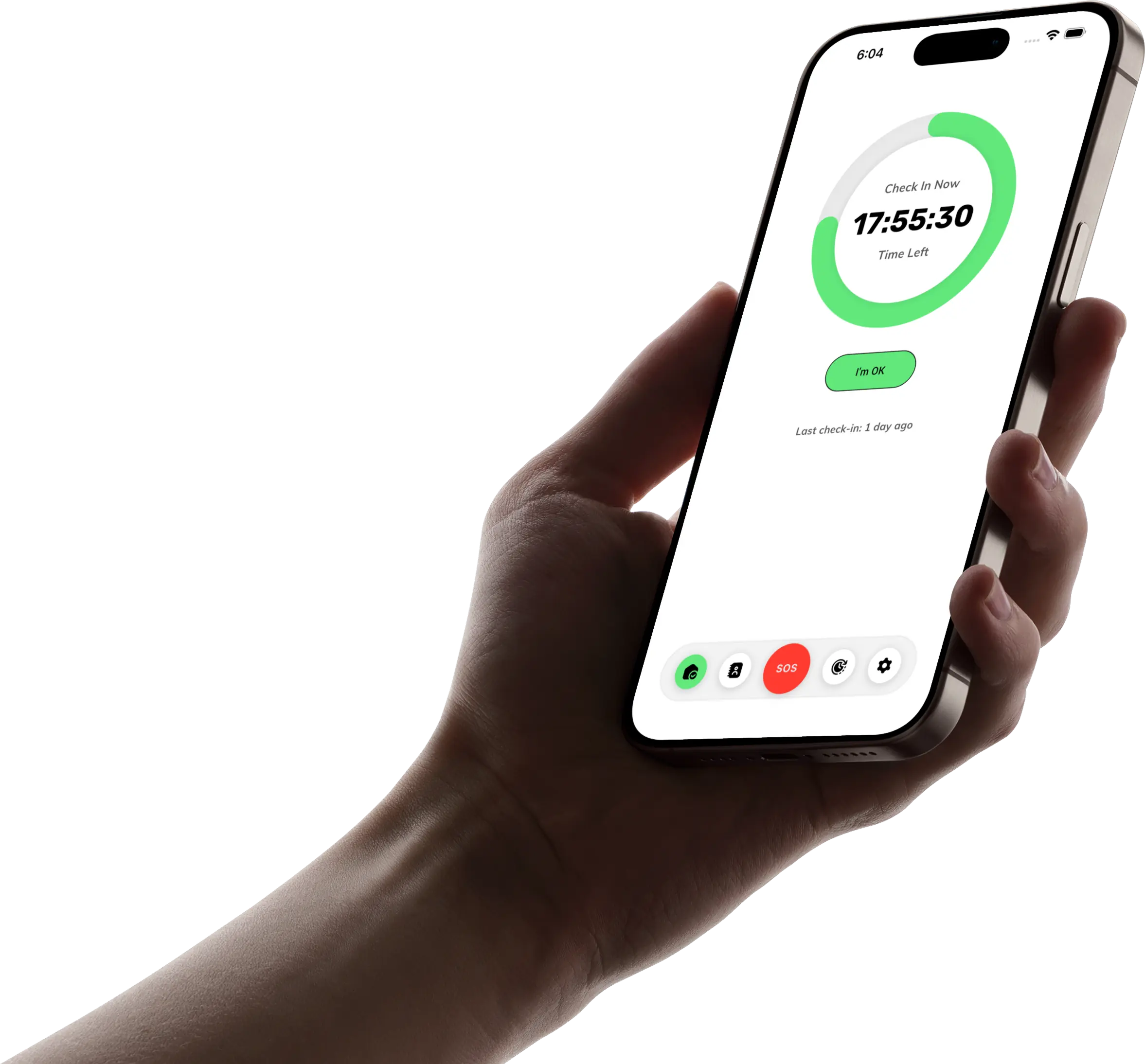
TapOkie is built around this idea. Once a day, you open the app and tap. That tap — one interaction — tells the app you are fine. If the tap does not come by your chosen time, TapOkie sends an SMS to your verified contacts. Those contacts do not need to download anything or create an account. They receive a straightforward message and can act on it.
There is no continuous GPS tracking. No hardware to buy. No call centre. Just a daily habit, a moment's effort, and the knowledge that someone would know.
The free tier covers the core check-in. Premium (around $4.99/month or $44.99/year) adds up to three contacts, the ability to pause or skip days when you are away or with family, a grace period before alerts are sent, a custom schedule, and an emergency button for moments when you need to reach contacts immediately.
Talking to family about this
One of the harder conversations after losing a partner is negotiating the new shape of your independence. Family members want to help; you want to manage your own life. Both things are true at once.
A daily check-in app can actually help with this tension. If your adult children know that you check in every morning, their background anxiety has somewhere to go. They are not wondering whether to call. They are not weighing up whether today is the day to suggest you move closer. The system does that quiet work for them.
It is worth framing it that way: not as a concession to worry, but as a practical arrangement that lets everyone get on with their lives. You maintain your routine. Your family can trust that they would hear something if anything went wrong.
If your family wants to explore this from their side, there is more on how it works at TapOkie for families.
The first year and beyond
Safety is one small piece of adjustment after bereavement — and not the most important piece. Grief, connection, meaning, and daily structure matter far more. But practical safety is real, and it deserves a practical answer.
Many people find that establishing a small daily habit early — something as simple as a daily tap — gives their days a light structure at a time when structure has largely dissolved. It is not a substitute for the relationship that has gone. It is simply a quiet acknowledgement that you are still here, that the day has begun, and that someone would notice if it had not.
The rhythm of a daily check-in is not permanent. Some people use it intensively for the first year or two, then find they need it less as new routines establish themselves, as they move, or as circumstances change. Others keep it going because the habit is simple and the reassurance — for themselves and for family — is worth the moment's effort.
Common questions
Is this the same as a medical alert device? No. TapOkie is a daily check-in app, not a medical alert system or call centre. It is designed for people who are broadly healthy and living independently, not for those who need immediate emergency response hardware.
What if I forget to tap one day? Premium includes a grace period, which gives you a short window after your check-in time before any alert is sent. You can also pause or skip days when you are travelling or staying with family — so your contacts are not alerted unnecessarily.
Do my contacts need to download anything? No. Verified contacts receive a plain SMS. They do not need an account, an app, or any setup.
Is my location shared? Not by default. TapOkie can share an optional location pin if your device permissions allow it, but this is not required and is not enabled automatically. There is no continuous tracking.
What countries does it work in? TapOkie is available in 25+ countries. Check tapokie.com for current availability in your region.
Is there a free version? Yes. The free tier includes daily check-in with one contact. Premium adds up to three contacts, schedule customisation, pause/skip, grace periods, and an emergency button.
If you are ready to set up a daily check-in, you can get started at tapokie.com/download. If you are exploring this for a family member, the for families page explains how it looks from their side.
Related reading: Living alone after divorce — safety and check-ins · Empty nest and living alone · When no one checks on you · Check-in without tracking · Living alone and mental health · How to check on elderly parents remotely