Af Syed Muhammad Daud Rizvi — Medstifter af TapOkie. Byggede appen, fordi så mange bor alene uden en enkel måde at sige, at de har det godt hver dag.
Some safety tools force everyone into the same app; SMS-first designs only require the person who wants the habit to install software. Contacts verify once, then receive plain-text alerts on any mobile number — critical when parents, neighbours, or colleagues will not join another platform.
The most common reason people don't use a safety app is not the app itself — it is the setup barrier for everyone else.
According to Ofcom's Adults' Media Use and Attitudes report, around 5% of UK adults — and a higher proportion of those aged 65 and over — do not use a smartphone. Even among smartphone owners in that age group, app confidence and willingness to install new apps varies significantly. An SMS-first safety system removes this dependency entirely.
"My mum doesn't have a smartphone." "My neighbour would never install another app." "My dad uses a basic phone."
If getting your safety circle working means convincing three people to install, create accounts, and stay logged in, most people give up before they start. And the result is the same as having no safety net at all.
Why "No Download Required" Matters
A safety app that sends alerts only to other app users creates a dependency chain. If your contact uninstalls the app, logs out, or has notifications turned off, your alert goes nowhere. If they have an older phone or aren't comfortable with apps, they may never set it up properly.
SMS has none of these problems:
- Works on any mobile phone, not just smartphones
- No account required on the recipient's side
- Not dependent on data, Wi-Fi, or app store access
- Delivers even when the recipient does not expect a message
For families that span generations — a 30-year-old setting up a check-in with a 70-year-old parent — SMS is the only technology you can reliably count on reaching both.
How TapOkie Works Without Requiring an App from Contacts
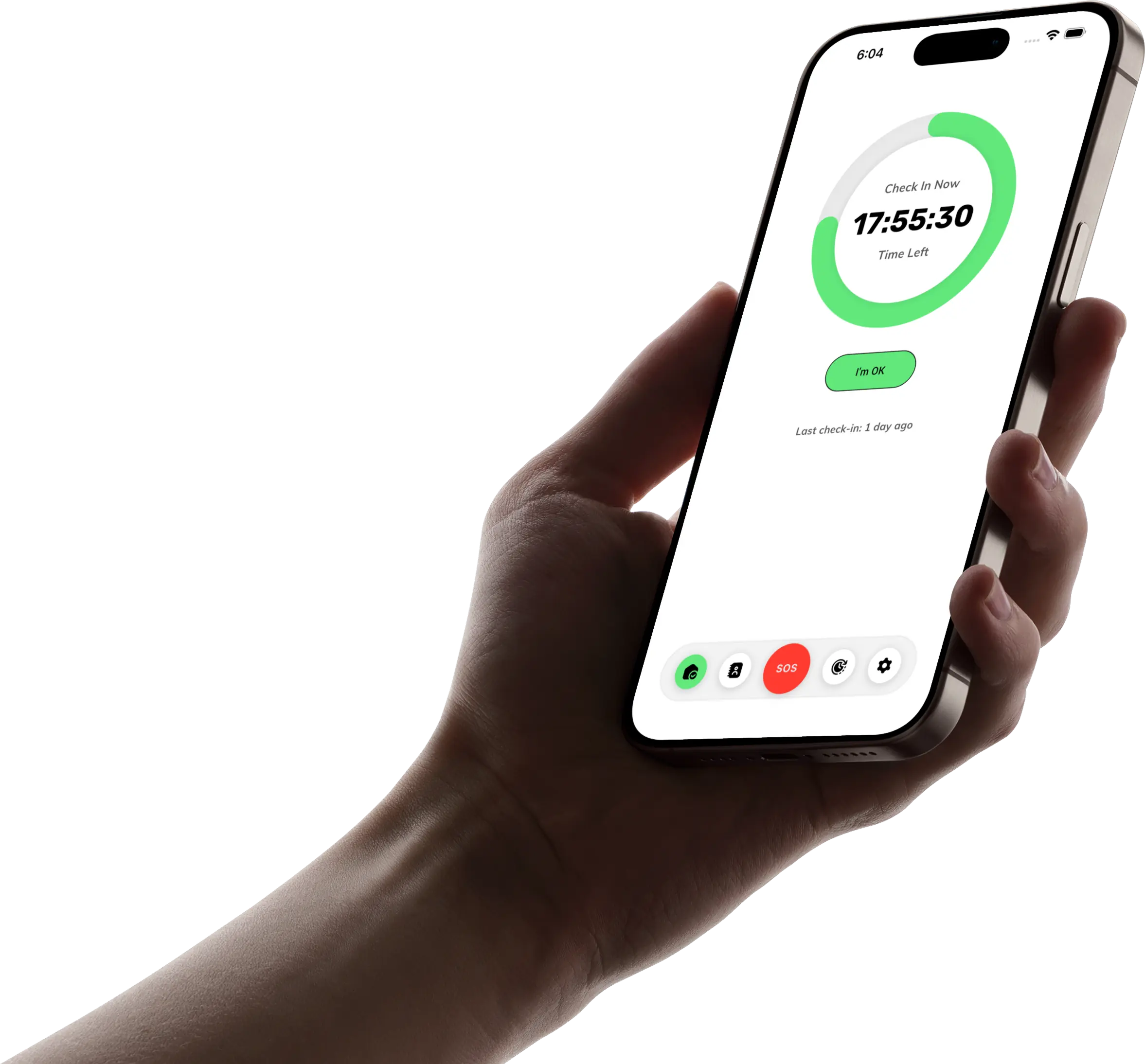
TapOkie requires only one person to install the app: you.
Your contacts receive a one-time SMS verification when you add them to your circle. They reply once to confirm they're happy to be included. That is the entire setup on their end.
From that point:
- If you check in on time, they hear nothing
- If you miss your window, they receive an SMS alert on whatever phone they own
- If you tap the emergency button (Premium), they receive an SMS immediately
The SMS arrives from a number they do not know, but the message content explains what it means and what to do. The alert is designed to be self-explanatory.
Your contacts never need to:
- Install TapOkie
- Create an account
- Have a smartphone
- Check an app
See how TapOkie works in three steps for the full setup flow.
Who This Solves the Problem For
People with older parents as contacts. A parent on a basic mobile can receive an SMS as easily as anyone else. You don't have to choose between using a safety app and including the people who are most likely to respond.
People with less tech-comfortable friends or neighbours. Your downstairs neighbour does not need to know what an app is. They receive a text. The text tells them what happened and what to do.
Solo travellers adding contacts abroad. If you're travelling and add a local emergency contact — a hotel manager, a host, a guide — they do not need to download anything to be part of your check-in circle. An SMS reaches them.
Lone workers with one trusted contact. Working alone from home or in the field, your contact might be a family member who has never used a safety app and never plans to. They still get the alert.
See Lone Worker Check-In App for Freelancers for the lone worker use case specifically.
What to Check Before You Choose Any Safety App
Not all apps that claim "no download needed" actually deliver on it:
- Does the alert go by SMS to any number, or to another app user only? Check the actual delivery mechanism, not just the marketing copy.
- Does the contact need to confirm anything in an app? If so, you're still creating a setup dependency.
- What happens if the contact's app is uninstalled or notifications are disabled? With SMS, nothing changes. With app-only alerts, the contact is silently removed from your effective safety net.
- Does the alert contain enough information to act on? "TapOkie: [Name] has not checked in today. If this is unexpected, you may want to check on them." That tells a non-technical contact exactly what to do.
The Bottom Line
A safety net is only as strong as its weakest link. If your contacts need to install an app, learn a new interface, and keep it updated — that is a lot of weak links.
TapOkie was built on the premise that the people you trust most should not face a technology barrier to being there for you. One tap from you. An SMS to them. No download, no account, no friction.
For a wider look at check-in apps and how they handle contacts, see Best Daily Check-In Apps for People Living Alone (2026).
Ready to set up your first contact? Download TapOkie free — the whole process, including your contact's verification, takes under two minutes.
Common questions
Do my contacts need TapOkie?
No. Alerts arrive by SMS after verification.
Why do other apps force downloads?
Network effects and feature parity — but it creates setup friction that kills adoption.
Is SMS secure?
SMS is imperfect as a medium but widely reachable. Pair it with verified contacts you trust.
What if someone changes numbers?
Update and re-verify the contact so alerts do not go to a dead line.