Af Syed Muhammad Daud Rizvi — Medstifter af TapOkie. Byggede appen, fordi så mange bor alene uden en enkel måde at sige, at de har det godt hver dag.
Alexa and similar smart speakers are great for voice calls and household routines within the Alexa ecosystem. A dedicated daily check-in app sends an automatic SMS to family if a check-in is missed — no app, no Echo, and no ongoing voice interaction required from either side.
If you have a parent who lives alone, you have probably wondered whether a smart speaker could do double duty as a safety net. Alexa sits on the kitchen counter, it can make calls, it responds to a voice — surely that covers it?
It covers something. But "something" and "a reliable daily check-in with automatic family alerts" are not quite the same job. This post compares smart-speaker family features (Alexa-style) with dedicated check-in apps like TapOkie, so you can decide what actually fits your situation — or whether you need both.
What smart speakers are designed to do
Amazon's Alexa ecosystem includes features aimed at connected families and older adults. Drop In lets a family member open a two-way audio channel to an Echo device. Alexa Together (Amazon's subscription service for remote caregiving, though availability and features vary by region and may change) has offered activity feeds, urgent alerts triggered by the person themselves, and remote assistance. The core value is voice-first, in-home communication for people who are already comfortable using an Echo daily.
That is genuinely useful. If your parent calls out "Alexa, call Sophie," it works. If they want to hear a weather forecast, set a reminder, or play the radio without picking up a phone, a smart speaker fits that need well. It also requires no smartphone on their end.
What it is less suited for is the specific scenario where no interaction happens at all — and you need to know whether that silence means everything is fine, or something is wrong.
What a dedicated daily check-in app is designed to do
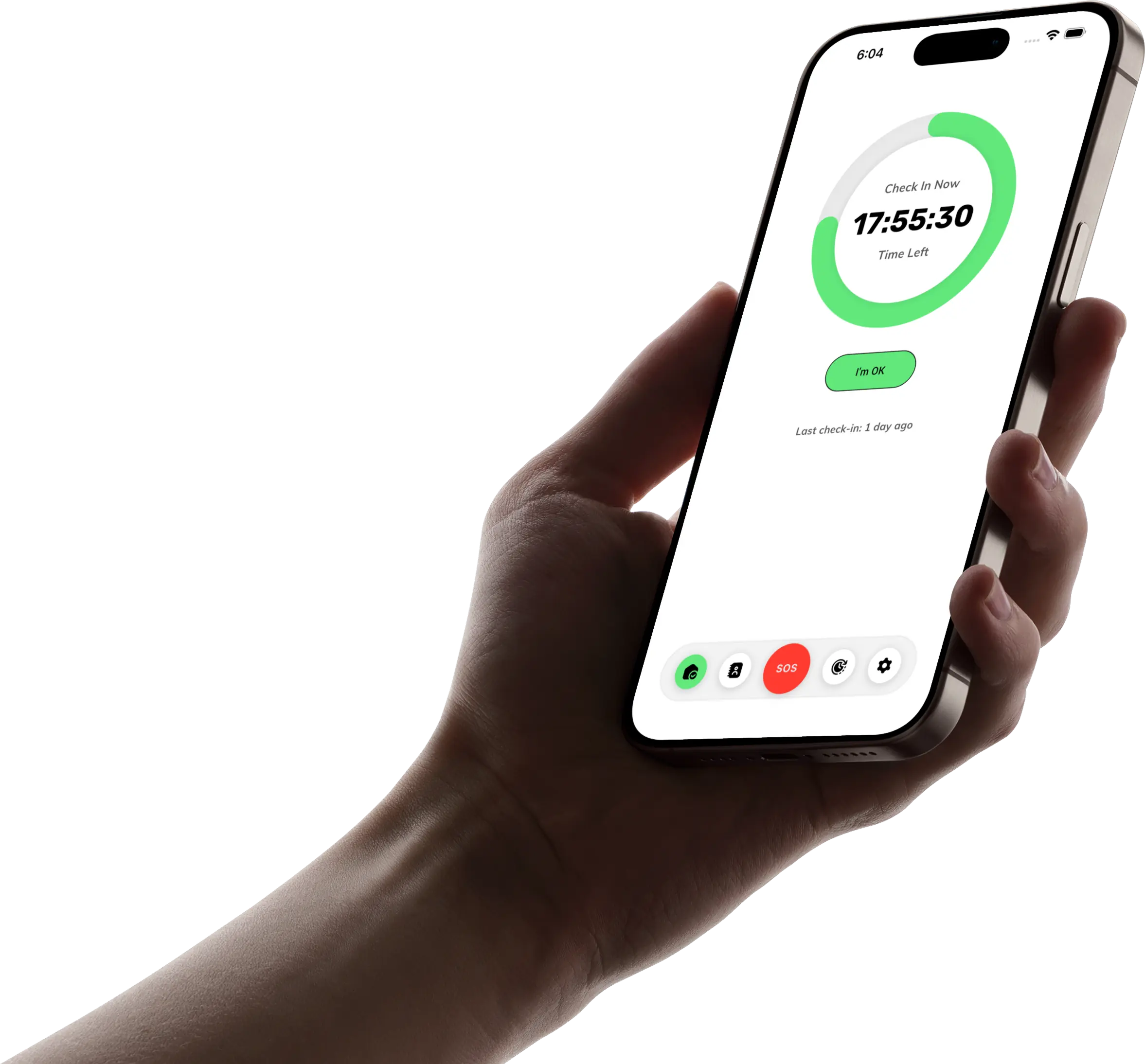
A check-in app like TapOkie starts from a different premise: the person living alone makes one deliberate tap each day — a single "I'm OK" signal. If that tap does not come by a time they have set themselves, the app automatically sends an SMS to their chosen contacts.
The contacts receive a plain text message. They do not need to download anything, own a smart device, or be online when it happens. The alert goes out whether or not anyone was already watching.
This is the missed-check-in SMS model, and it solves a different problem than voice drop-in. It is less about staying in touch and more about a clear daily signal — present means fine, absent means please check.
The core difference: push vs pull
Think of it this way. With a smart speaker, someone has to pull the check — a family member has to initiate a call, or notice an absence on an activity feed, or remember to Drop In. The system does not act on its own when nothing happens.
With TapOkie, the check is pushed automatically. If the daily tap does not arrive, the alert goes out without anyone having to remember to look. That shift from pull to push is the most important practical difference for families who worry about exactly the kind of day when no one noticed early enough.
Neither approach is wrong. They solve different things.
When Alexa-style features fit best
- Your parent already uses an Echo and is comfortable with it
- You want easy, casual voice calls between the generations
- You'd like in-home reminders, routines, or entertainment built in
- You are in the same smart-home ecosystem and check in proactively and regularly
- Your parent is reasonably active and connected, and the goal is communication rather than a safety backstop
When a dedicated check-in app fits best
- Your parent lives alone and you worry about an unnoticed fall or sudden illness
- You want an automatic alert that does not depend on anyone remembering to check
- Your family contacts are on different devices or platforms — some may not be smartphone users
- Privacy matters: TapOkie does not use continuous GPS or location tracking; it simply records whether a tap happened
- You want something low-friction for the person checking in — one tap, no conversation required
- You are not already deep in the Alexa ecosystem, or your parent is not
Can you use both?
Yes, and for many families that is the sensible answer. A smart speaker handles daily conversation and in-home convenience. TapOkie handles the safety backstop — the quiet daily signal that something catastrophic would interrupt.
They are not rivals. One is a communication device; the other is a missed-check-in alert. If your parent enjoys talking to Alexa and you also want the peace of mind that an automatic SMS brings when a check-in is skipped, there is no reason you cannot have both.
What TapOkie does not do
It is worth being clear: TapOkie is not a medical alert device, not a fall-detection wearable, and not a continuous GPS tracker. It does not monitor heart rate or call emergency services automatically. If those are the specific needs, a dedicated medical alert system or a wearable with health sensors is a better fit.
TapOkie's job is simple: one tap per day says I'm OK. Silence triggers an SMS to people who care. That simplicity is deliberate — it keeps the daily habit easy, the privacy clean, and the alert meaningful.
Common questions
Does the person checking in need an Alexa device to use TapOkie? No. TapOkie is a smartphone app with no dependency on any smart speaker or smart home ecosystem. It works on a standard iPhone or Android phone.
Do my family contacts need to download TapOkie to receive the alert? No. When a check-in is missed, TapOkie sends a plain SMS to the contacts you have verified. They do not need the app, an account, or any particular device.
Is Alexa Drop In private? Amazon has its own privacy policies and those can change — it is worth reading them directly. What we can say is that Drop In opens a live audio channel, which some people find reassuring and others find intrusive, depending on how it is set up and who has access.
Does TapOkie track location? No continuous GPS. Location in alerts is optional and uses normal device permissions — not an always-on map of where someone goes.
Is TapOkie free? There is a free tier and a Premium option. The core daily check-in with SMS alerts for missed check-ins is accessible without a large upfront cost.
What if my parent forgets to tap? The app can send them a gentle reminder before the deadline. If the tap still does not come, the alert goes to contacts. Occasional misses happen — the system is designed for real life, not perfection.
Choosing the right tool
Smart speakers are excellent at what they are built for: in-home voice interaction, family calls, and connected routines. If your parent is already using Alexa, that ecosystem has real value for day-to-day communication.
But if the specific worry is "what happens on a day when something goes wrong and nobody notices in time," a dedicated check-in app answers that question more directly. The automatic missed-check-in SMS does not depend on anyone remembering to look — it acts on silence.
For families who want both the daily connection and the safety backstop, combining the two tools is straightforward. Start with the job you most need done, and add the second layer when it makes sense.
If the safety backstop is where you want to start, TapOkie is free to download — one tap a day, and your contacts are covered.
Related reading: Apple Watch Fall Detection vs a Daily Check-In App · How to Check on Elderly Parents Remotely · Check-In vs Tracking · How to Talk to an Aging Parent About a Safety App