Kirjoittanut Syed Muhammad Daud Rizvi — TapOkien toinen perustaja. Rakensi sovelluksen, koska niin moni asuu yksin ilman helppoa tapaa kertoa joka päivä, että kaikki on hyvin.
Check-in apps, GPS trackers, and medical alert systems solve different failure modes. Match the category to your risk: delayed discovery for daily life, continuous location for real-time family maps, or fall/SOS hardware for higher clinical need — then compare brands inside the category that fits.
Three categories of app all promise to keep you or your loved ones safe: daily check-in apps, GPS trackers, and medical alert systems. They are not interchangeable — each answers a different question and fits a different moment.
- GPS trackers answer: where are you right now? They show a live map of someone's location, continuously, in the background.
- Medical alert systems answer: help me right now. A pendant or button connects you to emergency response when something acute happens.
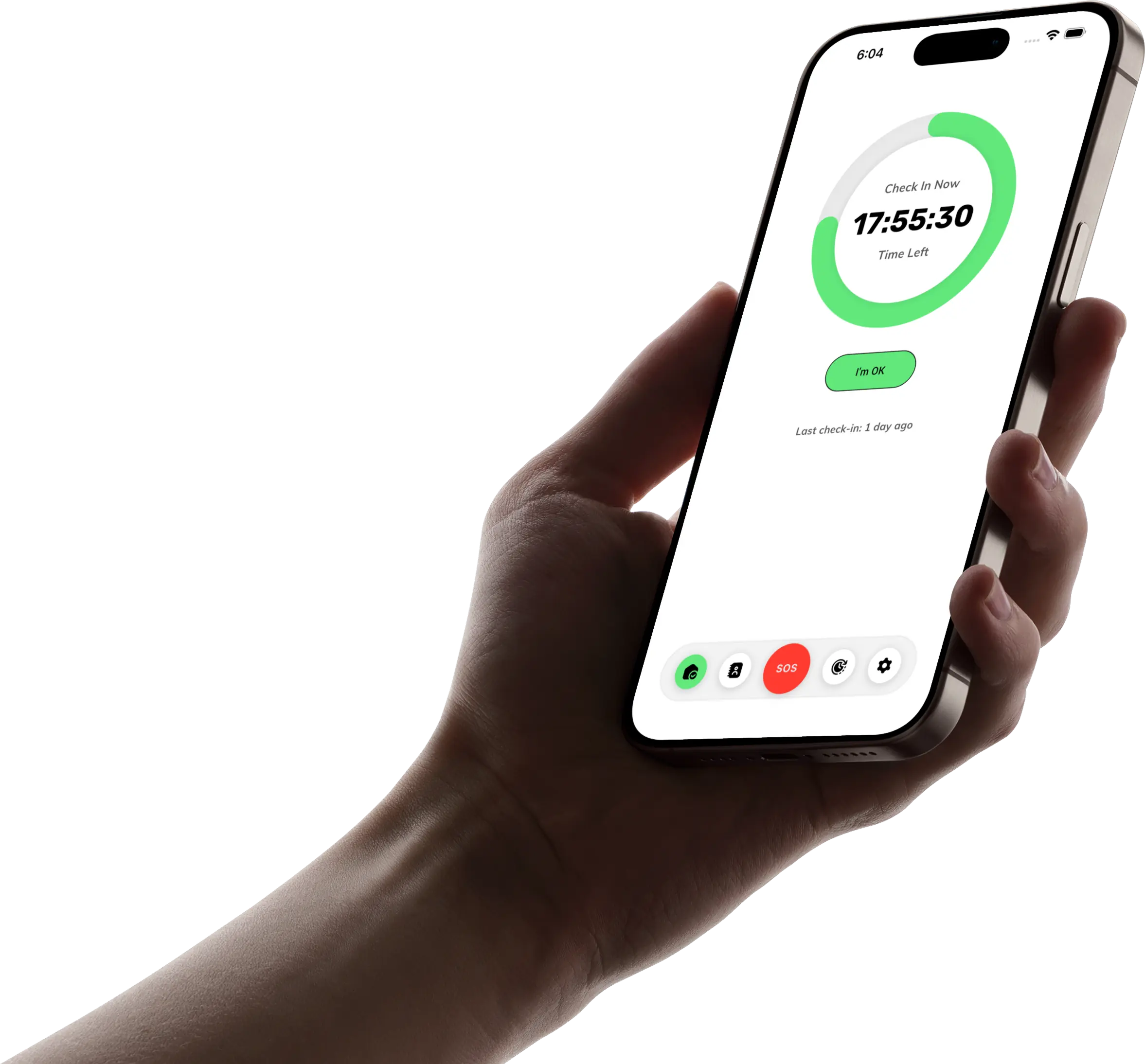
- Daily check-in apps answer: did you confirm you're OK today? No map, no continuous tracking — a deliberate daily signal that someone is fine, and an alert to trusted contacts if they're not.
Choosing the wrong category means over-surveilling someone who values independence, or under-protecting someone who needs a daily safety net. This guide explains how the categories differ and which fits your situation.
Looking for a head-to-head comparison? See TapOkie vs Snug Safety vs Life360 or TapOkie vs Life360 specifically.
The Problem with Most Safety Apps
Most safety solutions fall into a few categories, and each comes with trade-offs:
GPS tracking apps monitor your location around the clock. They drain battery, raise serious privacy concerns, and often make the person being tracked feel surveilled rather than cared for. Everyone involved usually needs to install the same app.
Medical alert systems (wearable pendants or buttons) are designed for falls and medical emergencies. They require dedicated hardware, monthly subscriptions that can run £20-£40/month, and are typically marketed only to seniors.
Smart home sensors (motion detectors, door sensors, cameras) require installation, a reliable home internet connection, and can cost hundreds upfront. They only work inside the home.
Family messaging apps keep everyone connected, but there's no automated safety net. If someone forgets to reply, nobody is automatically alerted. It relies entirely on people noticing silence.
How TapOkie Is Different
TapOkie was built around one simple idea: the easiest way to let someone know you're okay, every day.
Here's what that looks like in practice:
1. One Tap, Once a Day
No complicated routines. No lengthy forms. You open TapOkie, tap "I'm OK," and you're done. Your contacts know you're safe. The entire interaction takes seconds.
Most other apps require ongoing engagement-checking maps, reviewing activity feeds, or responding to messages. TapOkie reduces it to its simplest form.
2. Your Contacts Don't Need the App
This is one of TapOkie's biggest advantages. When you miss a check-in or tap the emergency button, your contacts receive a standard SMS alert directly on their phone. No app download, no account creation, no tech setup on their end.
For families with elderly parents or less tech-savvy contacts, this removes a massive barrier. Compare that to apps where everyone needs to install, sign up, and stay logged in.
3. Privacy by Design
TapOkie gives you full control over location sharing through your device’s permission dialog. Choose "Always" to share your location in the background, "Allow While Using App" to share only when you check in, or "Don’t Allow" to keep location off entirely. If enabled, your last known location can be included in alerts so your circle can find you-but only on your terms.
This is fundamentally different from GPS tracking apps that force constant monitoring with no opt-out. TapOkie’s philosophy is simple: confirm you’re safe, your way.
4. Multilingual Alerts
TapOkie lets you set the alert language per contact. If your mother speaks Spanish and your brother speaks English, each receives the alert in their own language. Most safety apps only support one language across the board.
5. Smart Safety Net, Not Surveillance
If you miss your check-in, alerts go out automatically. If you miss three consecutive days, TapOkie pauses check-ins to avoid unnecessary alerts-then lets you resume when you're ready.
There's also a one-tap emergency button for moments when you need help right now, not at the next check-in window. Up to 15 emergency taps per calendar month are included.
6. Flexible Scheduling
The free plan gives you a simple 24-hour check-in window. Premium lets you set custom check-in times for each day of the week, plus a 15-minute grace period so a few minutes late doesn't trigger a false alarm.
You can also pause check-ins entirely or skip specific dates in advance-perfect for holidays or travel days.
7. A Generous Free Plan
TapOkie’s free plan includes daily check-in, push reminders, 1 emergency contact, SMS alerts, flexible location sharing ("Always", "While Using App", or off), multiple app languages, and light/dark mode. That covers the core safety experience at zero cost.
Premium adds up to 3 contacts, the emergency button, custom scheduling, pause/skip, per-contact alert languages, and the grace period-for a fraction of what medical alert systems charge.
Quick Comparison
Here's how TapOkie stacks up against common alternatives:
Daily check-in simplicity: TapOkie uses a single tap. GPS trackers and smart sensors are passive but invasive. Medical alerts require a button press but only for emergencies.
Contacts need an app: With TapOkie, no. With most GPS trackers and family apps, yes. Medical alerts route through a call center.
Privacy: TapOkie lets you choose via your device’s permission-"Always", "Allow While Using App", or "Don’t Allow". GPS trackers force constant sharing. Smart sensors monitor activity patterns in your home.
Cost: TapOkie has a free plan and affordable Premium. Medical alerts typically cost £20-£40/month plus hardware. Smart sensors cost hundreds upfront.
Works anywhere: TapOkie works anywhere you have internet. Smart sensors only work at home. Medical alerts depend on cellular coverage and hardware range.
Multilingual: TapOkie supports per-contact alert languages. Most alternatives are English-only or single-language.
Who Is TapOkie Best For?
- Seniors who want to reassure family without being tracked
- Solo travelers who want a safety net without sharing every move
- Students living away from home for the first time
- People living alone who want someone to notice if something goes wrong
- Families caring for a loved one from a distance
The Bottom Line
If you need round-the-clock location tracking or fall detection hardware, TapOkie isn't trying to replace those tools. But if what you really need is a simple, private, daily confirmation that someone you care about is okay-TapOkie does that better than anything else.
No hardware. No complicated setup. Location sharing on your terms. Just one tap, every day.
For a full shortlist of daily check-in apps across categories, see Best Daily Check-In Apps for People Living Alone (2026). Also useful: fall detection and safety tools for people living alone, and how to structure a safety check-in routine with an ageing parent if you’re coordinating across generations.
Want to see for yourself? Download TapOkie for free and set up your first check-in in under 2 minutes.
Common questions
When is a check-in app enough?
When you mainly worry about no one noticing a quiet day, not minute-by-minute coordinates.
When do you need medical alert hardware?
Higher fall risk or clinician recommendation where automatic detection or one-button responders matter.
Are trackers privacy-friendly?
Often no by design. Expect maps, history, and multi-user networks.
Where does TapOkie sit?
In the check-in category with SMS-first escalation, not ARC medical monitoring.