Kirjoittanut Syed Muhammad Daud Rizvi — TapOkien toinen perustaja. Rakensi sovelluksen, koska niin moni asuu yksin ilman helppoa tapaa kertoa joka päivä, että kaikki on hyvin.
If you live alone and something goes wrong, the critical failure mode is delay — hours or days before anyone realises. A deliberate daily check-in with automated alerts when you miss a window closes that gap without forcing continuous location tracking on family members.
If you live alone and something goes wrong — a fall, a sudden illness, a fainting episode — the question is not whether someone will eventually notice. The question is how long it takes.
For most people who live alone with no daily check-in routine, the answer is: longer than you'd like.
The Delay Problem
When you live with other people, silence itself is unusual. Someone in the next room notices the absence of sound, the unbrewed kettle, the missed breakfast. That ambient awareness is not surveillance — it is ordinary cohabitation. It closes the gap between something going wrong and someone knowing.
When you live alone, that ambient signal disappears. The people who care about you only know something is wrong when they actively try to reach you — and most people do not reach out unless they have a reason to.
A missed call gets a follow-up message. A missed message gets a follow-up call. But if nobody initiates contact, nobody knows. And everyday life is busy. People assume no news is good news. It usually is — until one day it isn't.
Who Typically Finds Out — And How
In most cases, the people who eventually discover that something is wrong do so through indirect signals:
- A friend or family member calls and gets no answer — and keeps trying
- A landlord arrives to collect rent or do a check
- A neighbour notices an unread parcel, or lights on at unusual hours
- A colleague wonders why someone has not replied to messages in two days
- Emergency services are called by someone who cannot account for a person's whereabouts
None of these are systems. They are coincidences that happen to catch a problem. They work, eventually — but eventually can be many hours or several days.
This is the delay problem. Not the emergency itself, but the gap between the emergency and anyone finding out about it.
What a Daily Check-In Does
A daily check-in app is designed to close that gap. It turns "nobody knew" into "someone knew by the end of the same day."
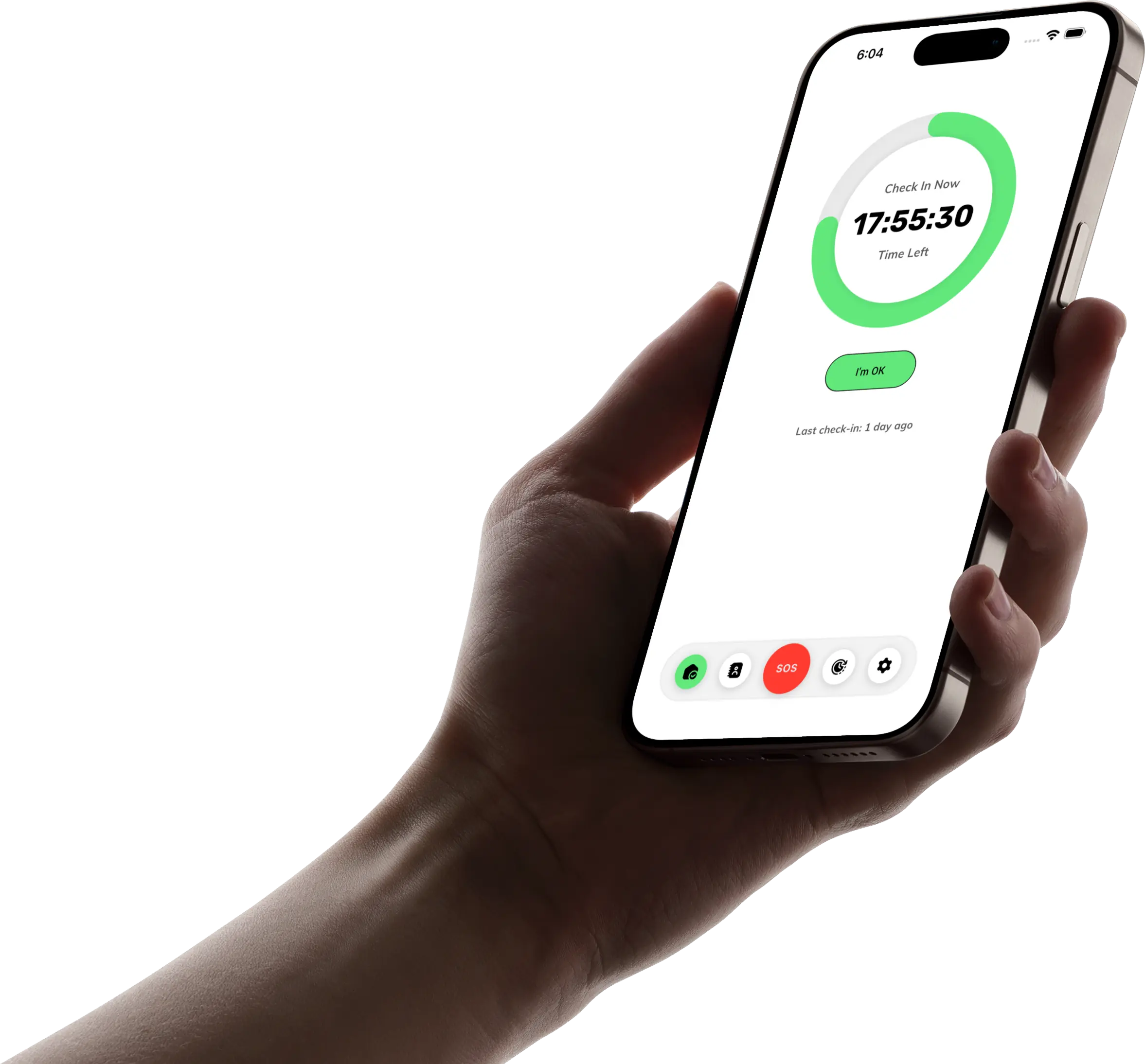
The mechanics are simple: once a day, you tap a button to confirm you're OK. If you tap, your contacts hear nothing — they know today was fine. If you miss your window, your contacts receive an SMS alert. Not a panic. Not an assumption of the worst. A prompt to check in on you.
That prompt is the difference between delay measured in hours versus delay measured in days.
TapOkie works on exactly this model. One tap. Miss it and your verified contacts receive an SMS on whatever phone they already have — no app required on their end. Your contact does not need a smartphone. They do not need to install anything. They receive a plain text message.
What Your Contact Gets
When you miss a check-in, your contact receives an SMS from TapOkie explaining that you have not checked in today. The message is brief and non-dramatic. It tells them your name, that you missed your window, and that they may want to check on you if this seems unusual.
This is not an emergency alert. It is a gentle flag — the kind of nudge that prompts a phone call or a text, rather than immediate panic.
Most missed check-ins are ordinary: a forgotten tap, a busy morning, a dead phone. The alert exists for the one time in many hundreds when it matters. On those other days, you tap, they hear nothing, and everyone gets on with their lives.
Setting It Up
Setting up TapOkie takes under two minutes:
1. Download TapOkie free 2. Add one contact — a parent, sibling, friend, or neighbour 3. Your contact receives a one-time verification SMS and confirms they're happy to be included 4. Set your check-in window (the default is a 24-hour window; you tap whenever suits your day)
That is the entire setup. From that point, the daily habit is a single tap. Your contact never hears from TapOkie unless you miss.
If you want more than one contact, or features like an emergency button, a custom daily schedule, or a grace period before alerts fire, those are available on the Premium plan. But the free plan gives you everything you need to start.
See how it works in three steps for the full picture.
This Is Not About Paranoia
Setting up a daily check-in is not an admission that you are vulnerable or that something is likely to go wrong. Most people who use TapOkie are perfectly healthy adults who simply want a reliable system in place — the same way you wear a seatbelt on an ordinary drive.
The daily tap becomes routine quickly. Within a week or two, it is as automatic as locking the door. And on the days that matter — which may be very few, or possibly none — the system is already running.
The people who feel best about living alone are not the ones who think nothing will ever go wrong. They are the ones who have thought about it, made a simple plan, and stopped thinking about it. A daily check-in is that plan.
See also: Living Alone Safety Checklist: 10 Things to Set Up for a broader list of practical steps, and Best Daily Check-In Apps for People Living Alone (2026) if you want to compare your options before choosing.
Download TapOkie free — setup takes under two minutes, and your contact gets their verification SMS today.
Common questions
What is the delay problem?
The time between you becoming unable to call for help and someone noticing. That lag, not the first injury, often drives the worst outcomes.
Is calling family daily enough?
It works until someone is busy, travelling, or assumes no news is good news. Automated miss alerts reduce that human gap.
Who should I assign as contacts?
People who will act — nearby neighbours, adult children, or trusted friends who can call or visit.
Does TapOkie require contacts to install apps?
No. Verified contacts can receive plain SMS on any phone.